

Why payment infrastructure may be the most important investment in African esports
Africa’s esports industry often focuses on visible indicators of growth: larger tournaments, better internet infrastructure, increased sponsorship, stronger leagues and greater publisher engagement. Yet the long-term success of any digital industry depends less on visibility and more on infrastructure. The critical question is not how many people are playing games, but whether the financial systems exist to support a sustainable digital economy around them.

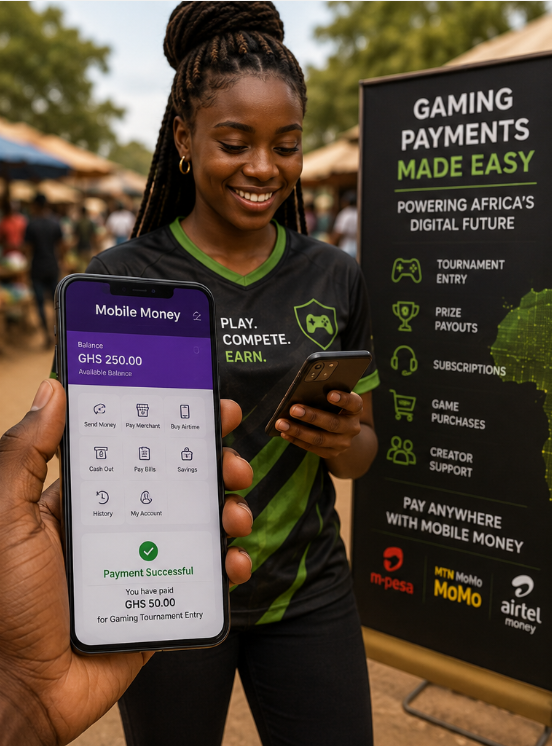
The GSMA’s State of the Industry Report on Mobile Money 2026 highlights the scale of the opportunity. Mobile money now supports more than two billion registered accounts globally and processes over $2 trillion in annual transaction value. In many African markets, mobile money has evolved beyond a payment solution into a core piece of economic infrastructure supporting savings, commerce, remittances, entrepreneurship and financial inclusion.
For esports, game development and digital content industries, this infrastructure may prove more important than any single tournament, sponsorship deal or technology platform.
The Infrastructure Challenge
Successful digital economies are built on systems that allow people to transact efficiently. Talent, creativity and innovation matter, but they rarely flourish without supporting institutions.
The gaming ecosystem depends on thousands of daily transactions, including:
- Tournament registrations
- Prize-money distribution
- Digital game purchases
- Creator monetisation
- Coaching services
- Merchandise sales
- Event ticketing
- Subscription services
- Cross-border transactions
Where payment systems are expensive, inaccessible or fragmented, growth becomes difficult. Where transactions are seamless, participation expands rapidly.
Mobile money has spent two decades solving precisely this problem across Africa.
Why Mobile Money Matters
The mobile money story is often framed as one of financial inclusion. While accurate, this understates its significance.
Mobile money providers have built:
- Trusted payment networks
- Digital identity systems
- Large merchant ecosystems
- Extensive agent networks
- Consumer confidence in digital transactions
- Financial access for underserved populations
These are the same foundations required for thriving gaming and esports economies.
The GSMA notes that mobile money increasingly supports humanitarian aid, climate finance, savings, credit and broader economic participation. Its role has expanded far beyond transferring money.
The same infrastructure can support Africa’s next generation of digital industries.
The Missing Partnership Opportunity
Most esports organisations approach telecom operators and mobile money providers as sponsors. This framing limits the potential relationship.
Sponsorship focuses on visibility.
Infrastructure partnerships focus on economic growth.
The distinction matters because mobile money providers are seeking:
- New digital consumers
- Higher transaction volumes
- Greater customer engagement
- Expanded merchant ecosystems
- Increased digital participation
Gaming communities represent exactly these opportunities.
Young gamers are:
- Mobile-first
- Digitally native
- Comfortable with online transactions
- Active in digital communities
- Likely future users of advanced financial services
From a mobile money perspective, gaming is not merely entertainment. It is a rapidly expanding digital marketplace.
The Economic Case for Investment
Africa possesses the world’s youngest population and one of its fastest-growing digital consumer bases. As internet access improves and smartphone adoption increases, gaming participation is expected to grow substantially.
This growth creates opportunities across multiple sectors:
- Esports competitions
- Content creation
- Game development
- Event production
- Digital marketing
- Streaming services
- Coaching and education
- Community management
Each sector generates economic activity and transaction demand.
Every tournament generates payments.
Every creator generates transactions.
Every developer creates digital commerce opportunities.
Every fan becomes a potential participant in the digital economy.
For mobile money operators, these are not marketing metrics. They are business opportunities.
What We Stand to Unlock

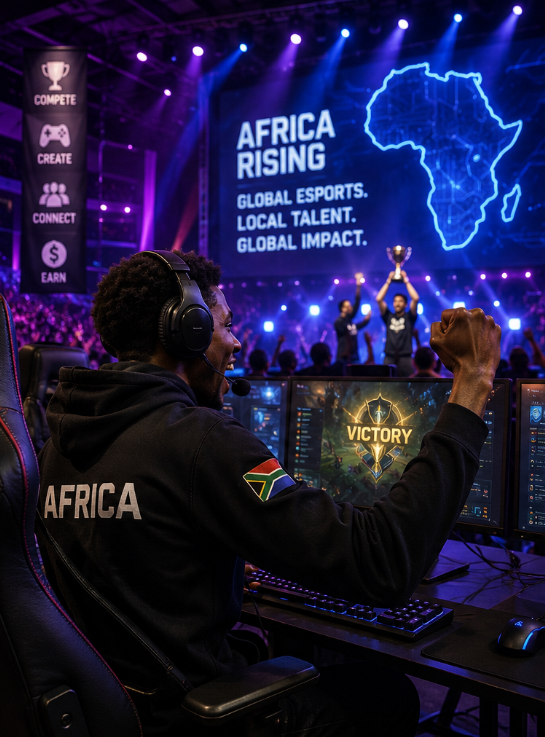
If mobile money organisations become active ecosystem partners rather than occasional sponsors, Africa could unlock significant economic value.
Potential outcomes include:
- Thousands of new digital jobs
- Sustainable creator economies
- Stronger local game development studios
- Increased youth entrepreneurship
- Greater participation by women and underserved communities
- More cross-border digital trade
- Increased investment into gaming and technology sectors
- Stronger digital skills development
- New intellectual property creation
- Globally competitive African gaming businesses
The impact would extend beyond esports and gaming into broader digital transformation goals.
How to Attract Greater Interest
Esports organisations must shift the conversation from sponsorship requests to economic partnerships.
Instead of emphasising:
- Event attendance
- Brand exposure
- Social media impressions
The sector should demonstrate:
- Transaction volume potential
- Customer acquisition opportunities
- Digital commerce growth
- Youth economic participation
- Entrepreneurial development
- Financial inclusion outcomes
Mobile money providers are more likely to invest when they see measurable economic returns rather than promotional benefits alone.
The strongest proposals will position esports as a platform for expanding digital economic participation among Africa’s youth.
Building the Future
Africa has already shown that it can lead the world in mobile money innovation. The next challenge is applying this infrastructure to industries capable of generating long-term economic growth.
Gaming, esports and digital content creation represent such industries. The audience exists, the technology exists and the financial infrastructure increasingly exists. What remains is strategic collaboration between esports organisations, telecom operators, fintech companies, investors and policymakers.
The future of African esports will not be built solely by players, publishers and tournament organisers. It will also be shaped by the institutions that enable digital commerce. Mobile money providers have spent years building the financial rails of Africa’s digital economy. The gaming industry now has an opportunity to build on top of them.
The organisations that recognise this opportunity first will help create a future where African youth are not merely consumers of digital products, but creators, innovators, entrepreneurs and global competitors within the digital economy.