

African esports has produced another story worth remembering. Not because it began with a famous organisation, a large sponsorship deal or a roster of continental celebrities. Quite the opposite.
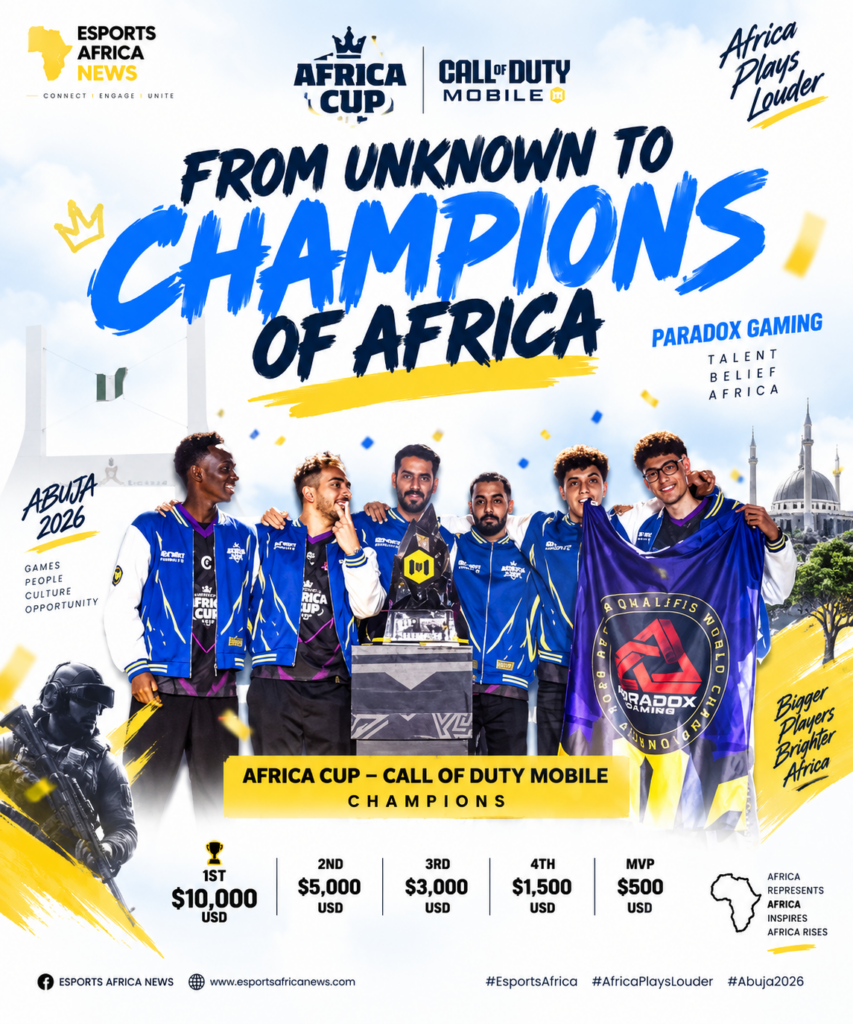
It is the story of Paradox Gaming — a team that arrived from a relatively unrecognised background and left Abuja as African champions.
That distinction matters.
Esports loves the mythology of the underdog, but Paradox Gaming’s achievement is more useful than a sporting fairy tale. Their rise offers evidence of something larger taking place across the continent: competitive talent is emerging faster than the institutions, investors and media systems built to identify it.
The African Championship in Abuja helped expose that gap.

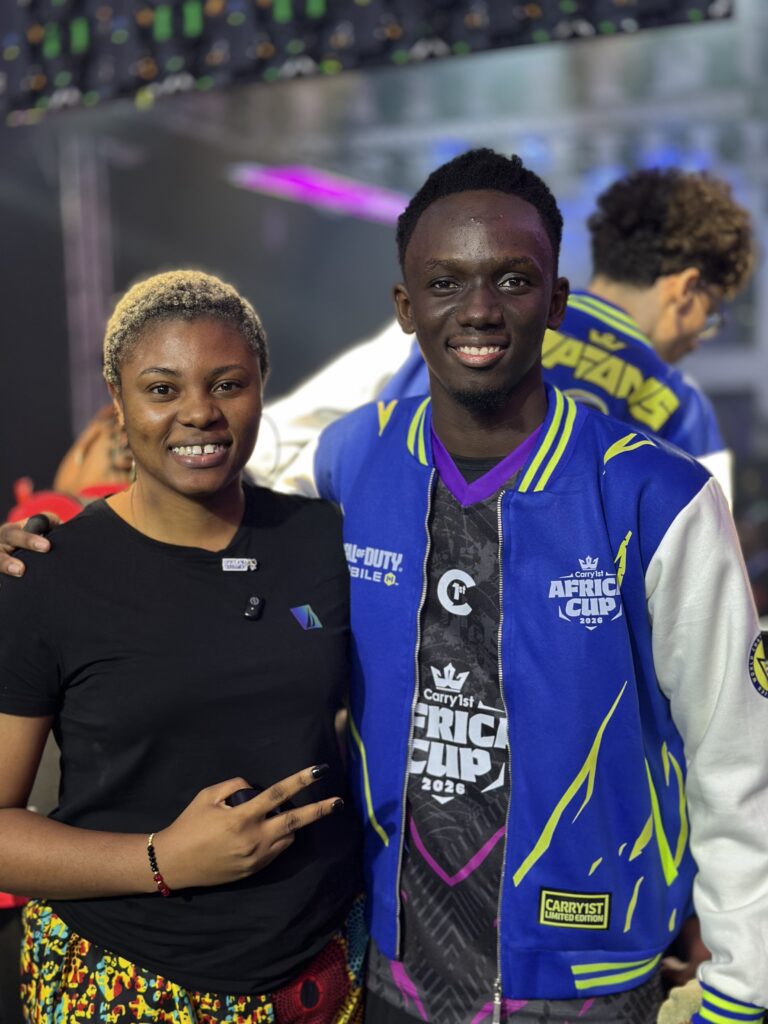
Before the trophy came the people
Every championship roster begins as a collection of individual stories.
The players who eventually form a winning team rarely begin their careers with professional facilities, salaried contracts and sophisticated coaching structures. African esports athletes, in particular, often build their competitive careers around the limitations of the market: connectivity, equipment, travel costs, tournament availability and the simple challenge of being noticed.
That makes the formation and development of Paradox Gaming an important story in itself.
How did these individuals find one another? What did they sacrifice? When did a collection of players begin to believe that it could become a championship-winning team? What happened in practice rooms, online matches and qualifying rounds before anybody was paying attention?
Those are not footnotes to the trophy. They are the story.
African esports needs to become better at documenting these journeys because sporting industries are built not merely around results, but around personalities, rivalries and narratives.
People remember champions. They become attached to the journey that created them.
Abuja changed the equation
Then came Abuja.
Paradox Gaming’s journey through the competition and into the finals placed the team in a very different arena. The unknown had become contenders. The contenders then had to prove they belonged there.
And they did.
Winning an African championship carries significance beyond the trophy. It creates visibility, commercial credibility and, most importantly, the possibility of representing Africa on the global stage.
For an African esports athlete, few opportunities are more valuable.
International competition provides something money alone cannot purchase: benchmarking. It tells players, teams, publishers and investors where African talent actually sits against the rest of the world.
Paradox now has an opportunity to carry more than its own badge abroad. Its players become part of the continuing experiment to discover how competitive African esports can become when its best talent is given consistent access to international competition.
That is both a privilege and considerable pressure.

Abuja understood the assignment
The host city deserves credit too.
Abuja demonstrated that an African esports championship does not need to feel like a computer tournament hidden inside a convention hall.
Entertainment from local artists, spectators and the wider event experience helped connect gaming with Nigerian popular culture. That is important.
The most commercially successful esports properties understand that the product is bigger than the match. Music matters. Fashion matters. Food matters. Creators matter. Spectators matter. The city matters.
Nigeria has a considerable advantage here.
It possesses one of Africa’s most powerful cultural export machines. Music, film, fashion and digital culture already travel far beyond its borders. Connecting esports to that ecosystem gives tournament organisers something considerably more valuable than rows of gaming stations.
It gives them an entertainment product.
Abuja was therefore more than a venue. It became part of the proposition.
But perhaps the most important crowd was not in the building
There is another number African esports should be watching carefully: online viewership.
The digital engagement surrounding the championship appeared impressive. The next task is to measure it properly.
Peak concurrent viewers. Average concurrent viewers. Unique viewers. Hours watched. Geographic distribution. Social impressions. Video views. Engagement rates. Creator amplification. Audience retention.
These statistics should not disappear when the stage is dismantled.
They are commercial assets.
If African esports wants telecommunications companies, banks, consumer brands, airlines, governments and international publishers to invest more seriously, the industry must move beyond saying that audiences are growing.
It must prove it.
The Abuja championship should therefore become another data point in an emerging historical record of African esports consumption.
Year against year. Tournament against tournament. Game against game. Country against country.
What gets measured becomes easier to value. And what can be valued becomes considerably easier to sell.
Africa is taking shape
This is why the Paradox Gaming story matters beyond Paradox Gaming.
Across the continent, the pieces of an esports economy are gradually moving into position.
Players are becoming more competitive. Teams are becoming more organised. Tournament operators are becoming more ambitious. Publishers are paying greater attention. Creators are expanding audiences. Cities are beginning to understand the attraction of gaming events. Brands are experimenting with sponsorship.
None of this means the African esports market has arrived fully formed.
It hasn’t.
But it is becoming harder to dismiss.
The next stage must be institutional: better player databases, credible rankings, documented tournament results, audience measurement, commercial rights structures, player contracts and pathways connecting national competition to continental and global tournaments.
Paradox Gaming’s rise demonstrates precisely why.
There are almost certainly more Paradoxes somewhere across Africa today — talented players practising outside the spotlight, largely unknown beyond their communities, waiting for the tournament that changes everything.
The industry’s job is to make discovering them less dependent on luck.
For years, Africa went looking for the world. Now the invitation is reversing.
There is a subtle but important change occurring in African gaming.
For decades, African players, entrepreneurs and organisations looked towards Europe, North America and Asia for legitimacy, investment and opportunity.
That relationship is beginning to mature.
Africa still needs international capital, technology, publishing expertise and partnerships. But it increasingly has something valuable to offer in return: a young digital audience, competitive talent, cultural influence, mobile-first consumers and an entertainment market that remains significantly underdeveloped.
So perhaps the message from Abuja is bigger than a championship.
Africa is no longer simply asking for a seat at somebody else’s esports table. It is beginning to build its own table.
Paradox Gaming arrived in Abuja relatively unknown and departed as African champions.
Their next destination is the global stage.
And as they travel outward to represent the continent, something equally interesting is happening in the opposite direction.
Africa is inviting the world in.
Come for the competition.
Come for the players.
Come for the culture.
Come for the audience.
And, increasingly, come for the business.
Because African esports is taking shape one unlikely champion at a time.