

The Esports World Cup has opened a historic opportunity for African esports. But with the clock ticking, can the continent’s federations, tournament organisers and investors turn ambition into action?
The clock is ticking. Africa cannot afford to stand still.


The world is preparing for the Esports World Cup 2027. Tournament organisers are being invited to build pathways to one of competitive gaming’s biggest stages. Millions of players could benefit. Yet across Africa, one uncomfortable question demands an urgent answer: will the continent organise itself to compete, or once again allow opportunity to pass it by?
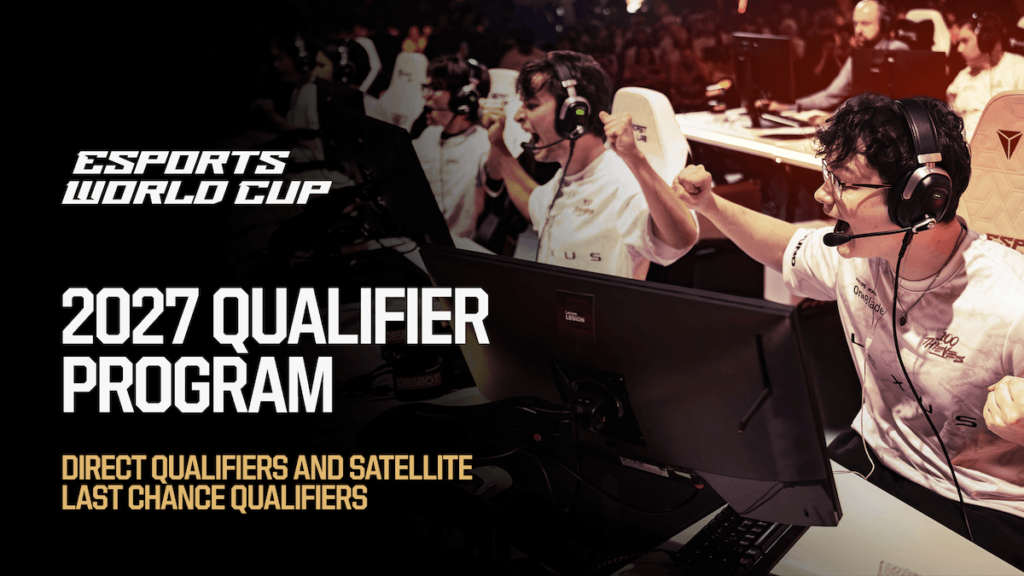
On October 19, the Esports World Cup (EWC) announced its 2027 Qualifier Program, an ambitious initiative targeting 1.8 million players through more than 400 events worldwide.
For Africa, this is potentially transformative.
The programme invites national federations, private tournament organisers, universities, gaming communities and independent operators to become part of an official qualification ecosystem.
For once, geographical distance need not be the defining obstacle. African organisers have an opportunity to bring recognised international competition closer to home.
But opportunity is not the same as readiness.
And Africa’s greatest challenge may not be a shortage of talented players. It may be the industry’s ability to work together.
Two pathways. One global destination.
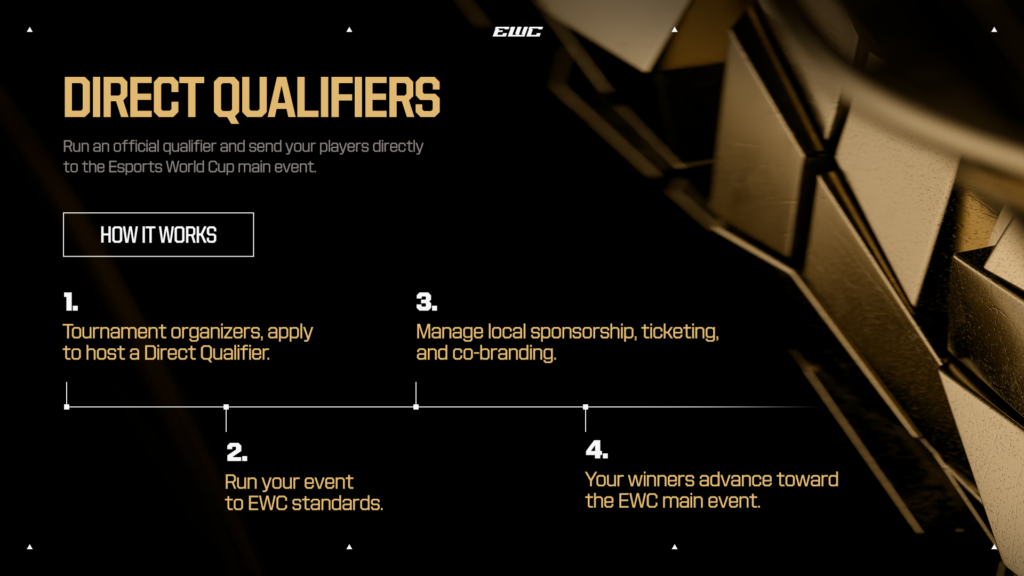
The newly announced programme introduces two routes.
EWC Direct Qualifiers allow established tournament organisers to connect their existing competitions to the Road to EWC. Operators retain their commercial identity and sponsorship opportunities while meeting international competitive standards.
EWC Satellite Last Chance Qualifiers offer grassroots organisations, gaming cafés, universities, federations and local tournament operators the opportunity to organise qualifying competitions.
Winners of Satellite events secure entry into the relevant EWC Last Chance Qualifiers, where they must compete for places at the main championship. The Esports Foundation will provide accommodation and visa support for qualifying winners.
Initially, Satellite qualifiers will cover Chess, Counter-Strike 2, FATAL FURY: City of the Wolves and Street Fighter 6, with further titles expected.
This distinction matters. Satellite qualification does not automatically guarantee a place at the World Cup. But it provides something African competitors have long needed: a more accessible, structured pathway towards international competition.

Africa’s biggest opponent may be fragmentation.
Africa has no shortage of esports ambition.
Across Nigeria, Ghana, Kenya, South Africa, Morocco, Egypt, Côte d’Ivoire, Uganda and many other countries, grassroots communities and tournament operators continue to build competitive ecosystems.
Yet the industry remains fragmented.
National federations often operate separately from independent tournament organisers. Commercial operators compete for limited sponsorship. Teams struggle to secure sustained investment. Talented athletes frequently depend on personal resources to pursue international opportunities.
The result is an industry with considerable potential but insufficient coordination.
The EWC programme creates an opportunity to change this.
Must every African country organise its own qualifier? Or could several neighbouring nations combine their resources to deliver stronger regional competitions?
A West African qualification circuit could connect Ghana, Nigeria, Côte d’Ivoire and neighbouring markets. East African organisers could explore partnerships linking Kenya, Uganda, Tanzania and Rwanda. Similar opportunities exist across Southern, Northern and Central Africa.
These arrangements would require approval under the EWC programme. Nevertheless, they offer a practical proposition: combine infrastructure, commercial resources and operational expertise to deliver higher-quality competitions.
Africa does not necessarily need more isolated tournaments. It needs stronger competitive pathways.
National federations and private operators must find common ground.
One of the continent’s most important decisions will concern leadership.
Who should organise Africa’s qualifiers?
National esports federations? Established commercial operators? Regional associations? Or independent consortia bringing several organisations together?
The answer should not be determined by institutional status alone.
The right to organise should be earned through competence, credibility, financial capacity and the ability to deliver.
Federations can provide national coordination and institutional engagement. Private operators contribute commercial experience, production expertise and community relationships. Universities and gaming venues provide access to emerging talent.
Rather than competing for control, these institutions should consider collaborative structures that protect their individual interests while advancing a common objective.
Independent operators should not be excluded simply because they lack formal federation affiliations. Equally, federations should not be dismissed when they can contribute governance and national coordination.
The best model may be a consortium with transparent responsibilities, shared commercial incentives and independently verified competition standards.
The EWC’s requirements for anti-cheat systems, officiating, verified results and publisher compliance provide an important benchmark.
Hosting qualifiers is an economic opportunity.
Hosting an official qualifier is not merely about sending players abroad.
It can support local businesses, esports production companies, gaming venues, hospitality providers, broadcasters, event managers and technology suppliers.
A well-organised regional competition could attract corporate sponsors, engage local audiences, generate digital content and strengthen a host country’s position within the gaming economy.
For African governments and tourism authorities, this deserves attention.
Countries already seeking to grow their digital economies should examine how esports competitions could complement youth employment, tourism, creative industries and technology development.
The commercial argument is compelling, although organisers must demonstrate realistic budgets, audience demand and operational capacity.
Importantly, hosting qualifications should not become an exercise in prestige alone. Competition quality and sustainable investment must take precedence over ceremonial launches and publicity.
Five urgent actions for African esports.
With applications closing on December 20, 2026, the continent has little time to waste.
1. Establish national and regional working groups immediately. Federations, independent operators, teams and commercial partners should identify credible organisations capable of delivering official qualifications.
2. Develop joint qualification proposals. Where individual countries lack sufficient infrastructure or funding, organisers should consider sub-regional partnerships, shared hosting responsibilities and coordinated sponsorship packages.
3. Mobilise private investment. Telecommunications companies, banks, technology firms, airlines and consumer brands should be approached with commercially credible proposals rather than general requests for support.
4. Prepare athletes and competition infrastructure. Organisers must establish transparent eligibility rules, anti-cheat procedures, qualified officiating, reliable connectivity and robust results verification. Teams need structured preparation rather than last-minute selection.
5. Submit credible applications before the deadline. Every prospective organiser should engage directly with the Esports Foundation, understand the requirements and present a realistic delivery plan.
Approved qualifying events must conclude by June 1, 2027.
Riyadh 2027: Africa must choose action over rhetoric.
The wider lesson extends beyond one tournament.
Africa cannot build a globally competitive esports industry through isolated events, institutional rivalry and occasional international appearances.
It needs cooperation between athletes, teams and organisers. It needs commercial investment, transparent governance and competitions that reward merit.
Above all, it needs organisations prepared to deliver together.
The 2027 Esports World Cup Qualifier Program offers an opportunity to demonstrate that Africa can organise international-standard competitions on its own soil.
Whether that opportunity becomes reality will depend on decisions made over the coming weeks.
The world is building its Road to EWC. Africa must build its own pathway into it.
The talent is ready. The opportunity is here. The deadline is approaching.
Will African esports leaders unite to deliver, or will the continent watch from the sidelines as others secure their places on the global stage?
Applications close: December 20, 2026.
Official information: https://esportsworldcup.com
Direct Qualifier enquiries: EWCDirectQualifier@esportsfoundation.com
Satellite LCQ enquiries: EWCSatelliteLCQ@esportsfoundation.com