


As Africa’s esports industry searches for sustainable models of growth, Ghana is demonstrating that the future of competitive gaming may not always begin inside dedicated gaming venues. Sometimes it starts where thousands of people already gather every week.
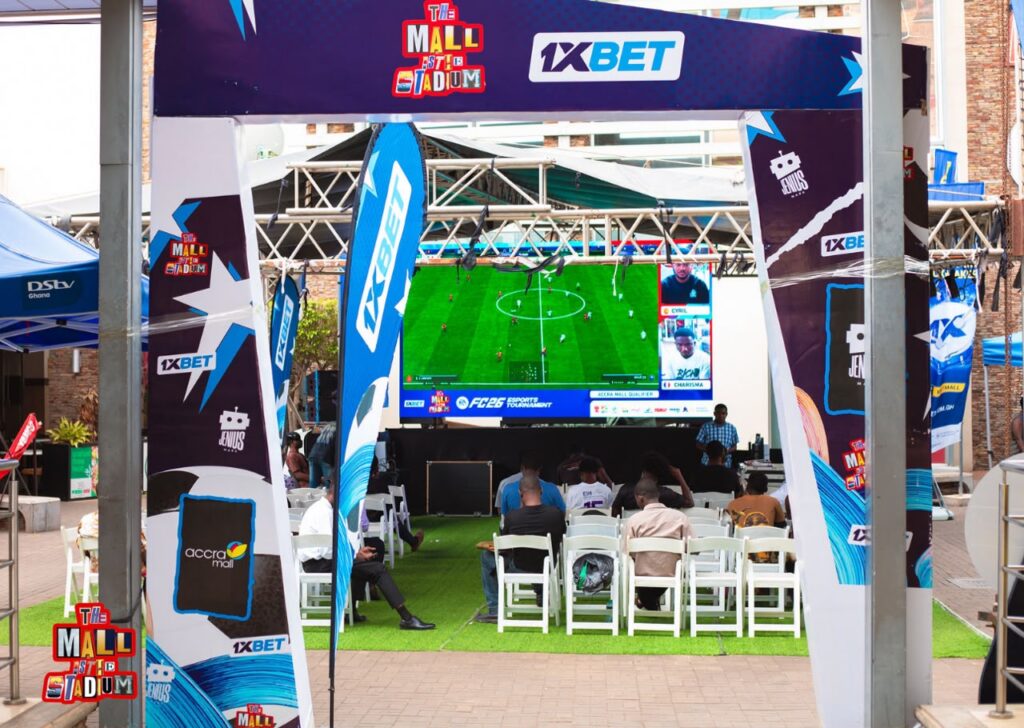
A new partnership between The Mall Is The Stadium (TMITS) and the Esports Association Ghana (EAG) is introducing organised football simulation competition into one of the country’s largest FIFA World Cup public viewing campaigns. Running from 6 to 19 July 2026, the initiative brings structured esports tournaments into six major shopping malls across Accra and its surrounding communities, offering a total prize pool of GH₵10,000.

For Esports Africa News, the significance of this initiative extends well beyond the tournament itself.
Across Africa, esports organisations continue to face a familiar challenge. Building dedicated arenas, attracting spectators and introducing new audiences to competitive gaming all require considerable investment. By embedding esports within an existing World Cup fan experience, organisers are taking a different approach. Rather than asking people to discover esports independently, they are bringing esports directly to where football supporters already are.
The competition spans Accra Mall, Junction Mall, West Hills Mall, Atlantic Mall, Marina Mall and Achimota Mall, transforming these retail destinations into temporary hubs for both football viewing and competitive gaming. During the World Cup, thousands of supporters will already be visiting these venues to watch live matches. Adding football simulation tournaments creates another layer of entertainment while exposing new audiences to organised esports competition.
This model reflects a wider global trend. Traditional sport and esports are increasingly complementing each other rather than competing for attention. Football simulation titles remain one of the most accessible entry points into esports because they are instantly recognisable to millions of fans. Someone who understands football requires very little introduction before understanding competitive digital football.
One particularly notable aspect of the programme is its deliberate focus on inclusion. Alongside the open competition, organisers have introduced a dedicated women’s tournament, providing female competitors with their own competitive platform during one of Ghana’s highest-profile gaming activations of the year.


For many African esports ecosystems, increasing female participation remains both a challenge and an opportunity. Creating dedicated competitive pathways not only improves visibility for women players but also demonstrates that esports development should be designed with diversity in mind from the outset rather than treated as an afterthought.
The involvement of headline sponsor 1XBET also highlights another important development. Commercial brands are becoming increasingly willing to invest in esports experiences that connect with broader entertainment audiences. Integrating gaming into an established football activation provides sponsors with access to both traditional sports supporters and digitally engaged younger consumers, creating stronger commercial value than isolated esports events often achieve.
Beyond competition, the organisers have positioned the initiative as part of a broader ambition to encourage digital literacy, creative skills and long-term engagement with esports in Ghana. While tournaments generate excitement, sustainable ecosystems are built through consistent participation, industry partnerships and accessible entry points for young people.
This is perhaps the most encouraging aspect of the collaboration. Rather than presenting esports as a one-off attraction during the FIFA World Cup, both organisations have described the partnership as the beginning of a longer-term relationship. Continuity has often been one of the missing ingredients in African esports development. Sustainable annual programmes typically deliver greater impact than isolated flagship events.
The initiative also reinforces Ghana’s growing reputation as one of West Africa’s most active esports markets. The country has steadily expanded organised competition, strengthened institutional leadership and increased collaboration between esports stakeholders and mainstream organisations. Partnerships such as this demonstrate increasing confidence that esports can operate comfortably alongside established sporting and entertainment experiences.
For the wider African industry, the project offers a valuable case study. Shopping centres already serve as community gathering spaces across many cities on the continent. They offer accessibility, existing infrastructure, strong footfall and commercial partners looking for engaging customer experiences. These characteristics make them attractive locations for grassroots esports activations that can introduce competitive gaming to entirely new audiences.
If successful, similar models could be replicated across Africa, allowing esports associations, tournament organisers and retail partners to work together in creating sustainable local ecosystems while lowering the barriers to participation.
Africa’s esports future will not be shaped solely by major international tournaments or purpose-built arenas. It will also be built through creative partnerships that connect gaming with everyday life.
Ghana’s latest collaboration shows that sometimes the most important arena is not one that has to be built. It is one that already exists, waiting to be reimagined.