


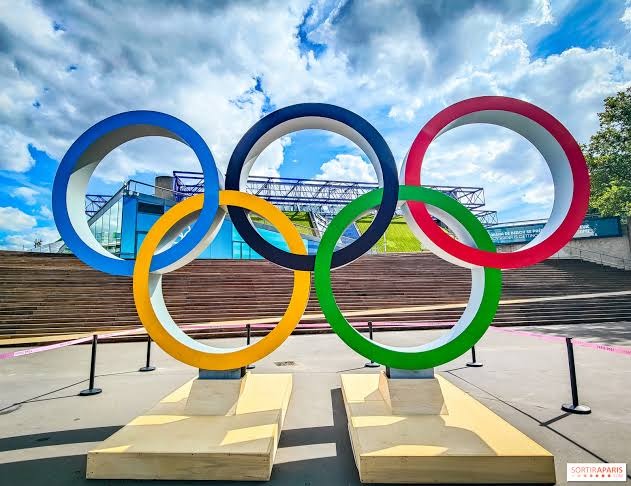
No big announcement. No dramatic press conference.
Just… silence.
Behind the scenes, the International Olympic Committee quietly pulled the brakes on its esports ambitions suspending its Esports Commission and putting the Olympic Esports Games on hold under new president Kirsty Coventry.
If you blinked, you probably missed it.
But this isn’t a small update, it’s a reset.
How We Got Here (Quick Timeline)
Let’s rewind a bit.
- 2024: Former IOC president Thomas Bach announces Olympic Esports Games at Paris Olympics
- A 12-year partnership with Saudi Arabia is locked in
- First event planned for 2025 → pushed to 2027
- October 2025: The deal collapses completely
Then comes Coventry.
She calls it a “pause and reflect” phase.
Now? That pause looks like a full stop.
Reports from BBC Sport and Esports Insider confirm the esports commission has effectively shut down, with the IOC shifting focus back to traditional sports and financial stability.
Here’s the Real Story Nobody’s Ignoring
While the Olympics slowed down…
Saudi Arabia didn’t.
They walked away from the IOC and doubled down on esports.
The result? The Esports World Cup.
- $75 million prize pool
- 25 tournaments across 24 games
- Runs from July to August 2026 in Riyadh
And that’s not all. There’s also:
- The upcoming Esports Nations Cup 2026 16 titles, $20 million prize pool, 120+ nations
- Partnerships with major publishers like EA, Tencent, and Ubisoft
- A full ecosystem built through the Esports World Cup Foundation that doesn’t need Olympic validation


So What Just Happened?
Simple.
The Olympics hesitated. Esports moved on.
For years, the IOC has been trying to “fit” esports into Olympic values — struggling with:
- Violent game titles
- Governance structures
- Monetization models
Meanwhile, esports doesn’t wait for permission. It evolves fast, builds its own rules, and follows where the audience goes.
Just look at how Twitch, YouTube Gaming, and platforms like FACEIT have built entire competitive ecosystems completely independent of any traditional sporting body.
Does Esports Still Need the Olympics?
This moment is bigger than one postponed event.
It’s about control.
For a long time, the idea was simple: the Olympics would legitimize esports. Give it structure. Give it recognition.
But now? Esports might not need that validation anymore.
Look at the contrast:
- The IOC operates on tradition, structure, and long-term cycles
- The esports ecosystem led by organizations like the Esports World Cup Foundation, IESF, and ESL Gaming thrives on speed, innovation, and global investment
One is trying to adapt. The other is already scaling.
And the numbers back it up. Esports already has:
- Prize pools that rival or exceed traditional sporting events the Esports World Cup alone sits at $75 million
- Millions of global viewers across Twitch and YouTube Gaming
- Publishers like Riot Games, Valve, and Activision running their own leagues, tournaments, and ecosystems
All without Olympic involvement.
So the real question isn’t whether esports can fit into the Olympics.
It’s whether it even makes sense anymore.
This isn’t esports losing momentum.
If anything, it’s the opposite.
It’s esports realizing it doesn’t need to be folded into an old system to prove its worth. It’s choosing independence over validation, speed over structure, and culture over conformity.
The Olympics had an opportunity to lead this shift to meet esports where it is and evolve alongside it.
Instead, they paused.
And in an industry that updates, evolves, and reinvents itself almost daily as tracked daily on Esports Insider, Dot Esports, and Esports Charts pausing doesn’t just slow you down. It pushes you out of the conversation.
Because while one side is still deciding what esports should look like…
The other side is already building the future.