Breaking the Silos: Why Africa’s Esports Ecosystem Must Work Together to Unlock Its True Potential
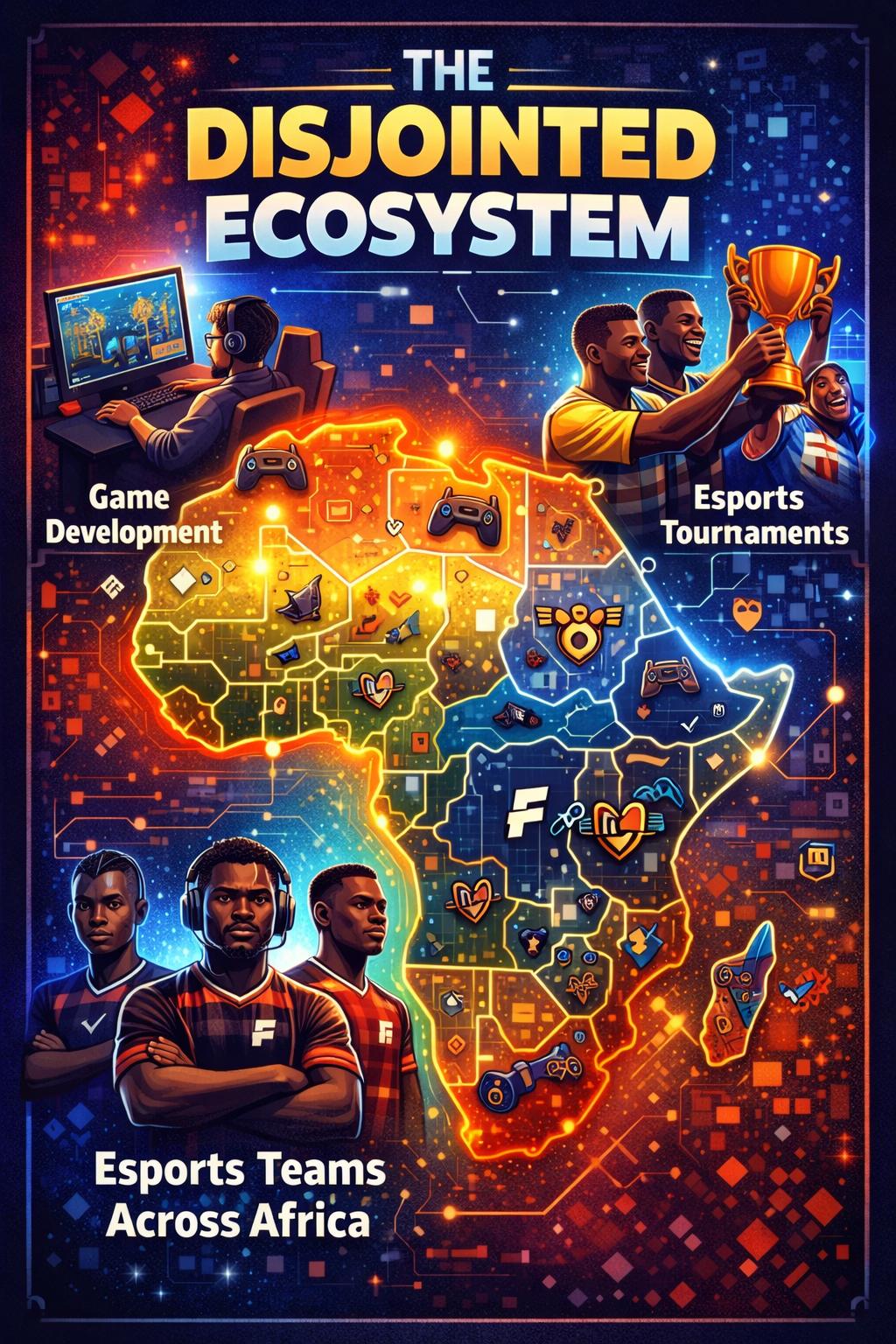
Across the continent, passionate developers are building games, talented players are competing, tournament organisers are hosting events, teams are scouting talent, and media platforms are telling the stories of African esports. Yet despite this activity, the industry still feels fragmented.
Instead of operating as a unified ecosystem where there is a seamless flow of energy and content, many stakeholders are working in isolation. Game developers rarely interact with esports tournament organisers. Tournament organisers often run competitions without deep collaboration with teams or federations. Esports teams struggle to find sustainable talent pipelines. Athletes lack structured development pathways.

As a result, there is limited media coverage and inconsistent, limiting visibility for African events.
This disjointed structure is slowing the growth of esports in Africa. If Africa wants to become a global esports powerhouse, the industry must move from isolated activity to ecosystem collaboration.
The Silo Problem in African Esports
A healthy esports industry functions like an interconnected value chain. Game developers build competitive titles. Tournament organisers create competitive platforms. Teams nurture athletes.
Media amplifies stories and audiences. Sponsors fund growth. Fans sustain the ecosystem.
In Africa, these parts exist but they rarely operate together strategically.
Game Developers and Esports Are Rarely Connected
African game studios are increasingly producing original titles. However, very few of these games are integrated into the esports ecosystem.
Most esports competitions in Africa revolve around international titles such as:
- PUBG Mobile
- Counter-Strike 2
- Dota 2
- League of Legends
- Rocket League
While these games are important, African developers are often left outside the competitive ecosystem. Without esports integration, local games struggle to gain traction.
Tournament Organisers Operate Independently
Across Africa, tournaments are being organised by various groups community organisers, brands, gaming hubs, and startups. However, these organisers often operate independently without:
- shared tournament calendars
- standardized rulesets
- talent pipelines
- cross-border collaboration
The result is duplicated efforts and fragmented competition structures. Players move from event to event without a clear competitive ladder.
Teams and Athletes Lack Structured Development Pathways
Professional teams across Africa are growing, but the talent pipeline remains weak. Many athletes enter esports through informal community competitions rather than structured leagues. Without strong collaboration between:
- teams
- tournament organisers
- academies
- grassroots competitions
All the above makes player development remains inconsistent.
Media Coverage Is Still Fragmented and limited to major events
Media platforms covering African esports are increasing, but coordination remains limited.
Stories about African esports are often underreported globally, and within Africa they are scattered across different platforms without strategic amplification. Without coordinated storytelling, major achievements by African players and teams can pass unnoticed internationally. This weakens the commercial appeal of the ecosystem.
Why This Matters for the Future of African Esports
A fragmented ecosystem discourages:
- sponsors
- investors
- international partners
- publishers
Sponsors want stable ecosystems with clear audience reach. Investors want scalable structures. Publishers want organized competitive environments. Without alignment between industry actors, Africa risks missing a massive opportunity.
The global esports industry is projected to exceed $2 billion in revenue within the next few years, and Africa has one of the fastest-growing gaming populations.
Growth requires coordination. Building an Integrated African Esports Ecosystem. To unlock the full potential of esports in Africa, stakeholders must shift from individual projects to ecosystem collaboration.
Esports Africa News provides some key solutions.
1. Create National and Regional Esports Ecosystem Networks
African countries should establish Esports Ecosystem Networks bringing together:
- game developers
- tournament organisers
- esports teams
- athletes
- media platforms
- sponsors
- education institutions
These networks would facilitate:
- joint planning
- information sharing
- talent identification
- collaborative events
2. Integrate African Game Developers into Esports
African studios should be encouraged to design competitive-ready games. Tournament organisers can support this by hosting competitions for African-developed titles alongside global games.
This approach would:
- promote African intellectual property
- create new esports opportunities
- strengthen the regional gaming economy
3. Establish Structured Tournament Ecosystems
Rather than isolated tournaments, Africa needs tiered competitive systems, including:
Grassroots tournaments
→ Regional leagues
→ National championships
→ Continental competitions
This structure would provide athletes with a clear progression pathway.
4. Create Player Development Pathways
Player development must become a strategic priority.
This includes:
- esports academies
- youth leagues
- university esports programs
- coaching systems
Teams should collaborate with tournament organisers to identify and nurture talent early.
5. Build Media Collaboration Platforms
African esports media outlets should collaborate rather than compete in isolation including organising summit, media events, training and engagement for wider visibility.