The Community Economy: What Africa’s Esports Industry Can Learn from Free Fire’s Remarkable Rise

Africa’s gaming industry has no shortage of talented players. Its greatest challenge is building communities that endure.

Across the continent, esports organisations often focus their attention on tournaments, prize pools and professional competition. Yet history suggests that sustainable gaming ecosystems are rarely built from the top down. They emerge from communities that create belonging long before they create champions.
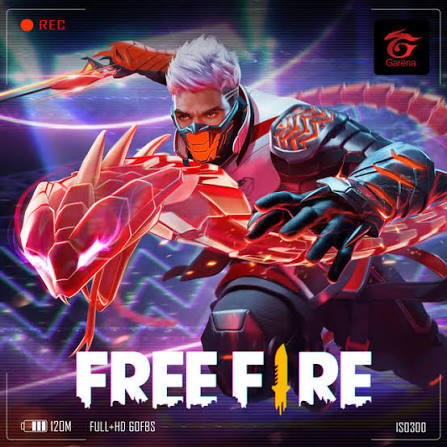
That is perhaps the most important lesson from Garena Free Fire’s success across Sub-Saharan Africa.
In an exclusive interview with Esports Africa News, Oluwaseun “Senez” Aladelo, KOL and Community Specialist for Garena Free Fire Sub-Saharan Africa, offered a rare insight into how one of the world’s largest mobile esports titles has cultivated one of Africa’s most active and resilient gaming communities.
The discussion moved beyond game mechanics and tournament formats. Instead, it explored an increasingly important economic question: how do publishers build communities that continue to grow long after the excitement of a tournament has faded?
The answer, according to Senez, lies in recognising that community is not a marketing exercise. It is the product itself.
For many organisations entering African esports, growth is often measured by download numbers, tournament registrations or social media impressions. While these metrics have value, they reveal only part of the picture. The true strength of a gaming ecosystem lies in the relationships formed between players, creators, organisers and local leaders.
Free Fire’s strategy reflects this understanding.
Rather than relying exclusively on large-scale competitions, Garena has invested in grassroots engagement, creator development, local partnerships and consistent interaction with players. Every tournament becomes an opportunity to strengthen the wider community rather than simply crown a winner.
This approach has particular significance for Africa.
The continent is home to one of the world’s youngest populations, with smartphone adoption continuing to rise and mobile internet becoming increasingly accessible. For millions of young Africans, mobile gaming represents their first meaningful interaction with competitive gaming.
That accessibility has fundamentally altered the economics of esports.
Unlike traditional PC or console ecosystems, mobile gaming removes many of the financial barriers that previously limited participation. Players no longer require expensive hardware to enter competitive environments. Communities can emerge from schools, universities, neighbourhoods and informal gaming groups, creating ecosystems that are both geographically diverse and socially inclusive.
Free Fire has understood this reality exceptionally well.
The game has become more than a popular mobile title. It has evolved into a platform where players compete, creators build audiences, tournament organisers establish brands and businesses discover new consumers.
In economic terms, the community itself becomes an asset.
Every engaged player contributes value beyond gameplay. Some become streamers. Others become event organisers, shoutcasters, moderators, designers, influencers or entrepreneurs. Collectively, they create a network effect that strengthens the entire ecosystem.
This is where many emerging esports organisations across Africa can draw valuable lessons.
Community cannot be activated only when tournaments are scheduled. Nor can it depend solely on prize money or sponsorship campaigns. Sustainable ecosystems require year-round investment in conversations, local leaders, educational initiatives, creator support and meaningful engagement.
Senez highlights another important dimension of modern community building: collaboration.
Gaming publishers increasingly recognise that creators, influencers, tournament organisers and local ambassadors are not simply promotional channels. They are trusted voices capable of translating global brands into local cultures.

Africa’s diversity makes this approach essential.
A strategy that succeeds in Lagos may require adaptation in Nairobi, Accra or Johannesburg. Strong community management therefore depends on local knowledge, cultural understanding and authentic relationships rather than standardised global campaigns.
Technology is also reshaping how these communities operate.
Artificial intelligence is beginning to influence player engagement, community moderation, content discovery and marketing. Digital analytics now provide publishers with unprecedented insight into player behaviour and engagement patterns. Yet even as technology advances, the interview reinforces a simple truth: people remain at the centre of every successful gaming ecosystem.
Technology may connect communities.
Trust sustains them.
The implications extend beyond esports.
Africa’s broader digital economy increasingly depends upon communities built around shared interests, collaborative learning and creator-led innovation. Gaming demonstrates how these communities can generate employment, develop digital skills, stimulate entrepreneurship and encourage technological adoption at scale.
Esports therefore becomes more than competitive entertainment.
It becomes infrastructure for the creator economy.
For investors, policymakers and educational institutions, this should prompt a shift in thinking. Measuring success purely through tournament attendance or prize pools overlooks the deeper value generated by healthy gaming communities. The strongest ecosystems create long-term engagement, repeat participation and pathways into careers across technology, media, software development, marketing and digital production.
As Africa’s gaming industry continues its rapid expansion, organisations that invest in people before products are likely to build the most enduring brands.
Free Fire’s experience demonstrates that lasting ecosystems are not created through isolated events.
They are built through consistent relationships.
For the continent’s emerging publishers, tournament organisers and esports organisations, that may prove to be the most valuable lesson of all.
Watch the full exclusive interview with Oluwaseun “Senez” Aladelo on the Esports Africa News YouTube Channel:
https://youtu.be/ywSRQMC0rBE?si=7f4ocDSkjrYKPgHr
At Esports Africa News, we continue to spotlight the individuals and organisations shaping Africa’s gaming, esports, game development and digital innovation ecosystem.
If your organisation is building the future of gaming in Africa, we want to tell your story.
Contact: info@esportsafricanews.com
Website: www.esportsafricanews.com