Africa’s Esports Triangle: Why Athletes, Teams and Tournament Organisers Must Grow Together
Africa has esports talent, ambitious teams and an expanding tournament ecosystem. Yet these three pillars frequently operate without the commercial relationships, professional standards and shared incentives needed to build a sustainable industry. Could fixing this triangle be the breakthrough African esports has been waiting for?
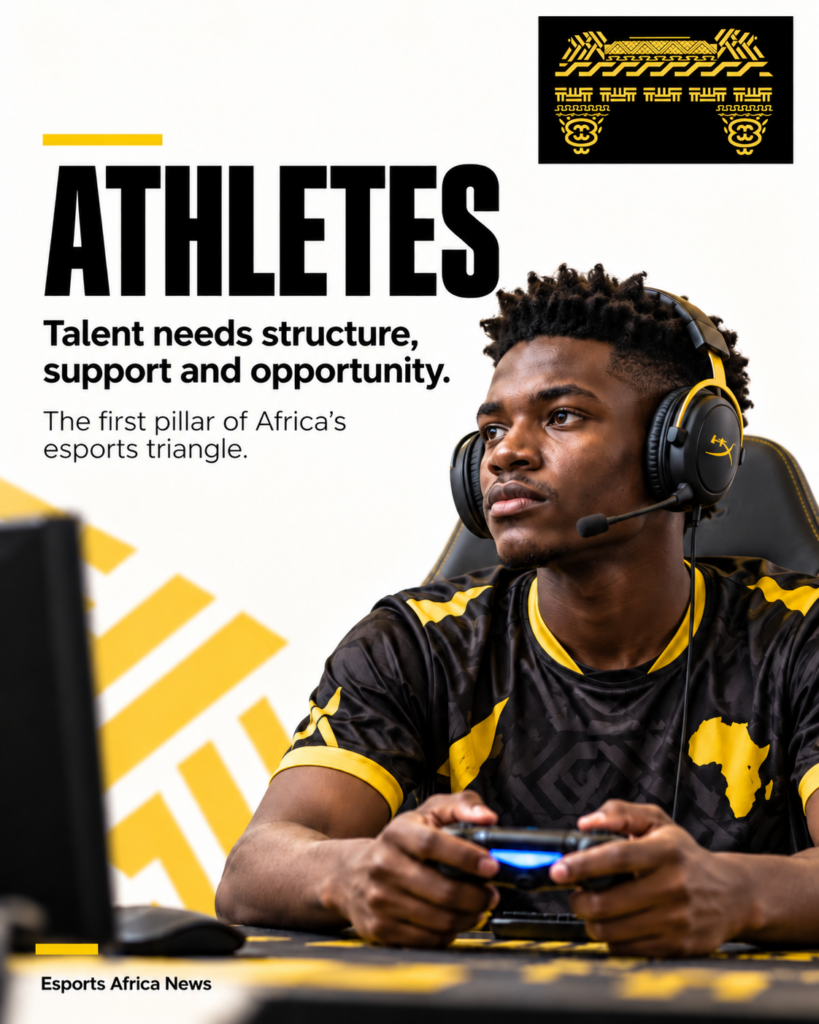
The triangle that should power African esports
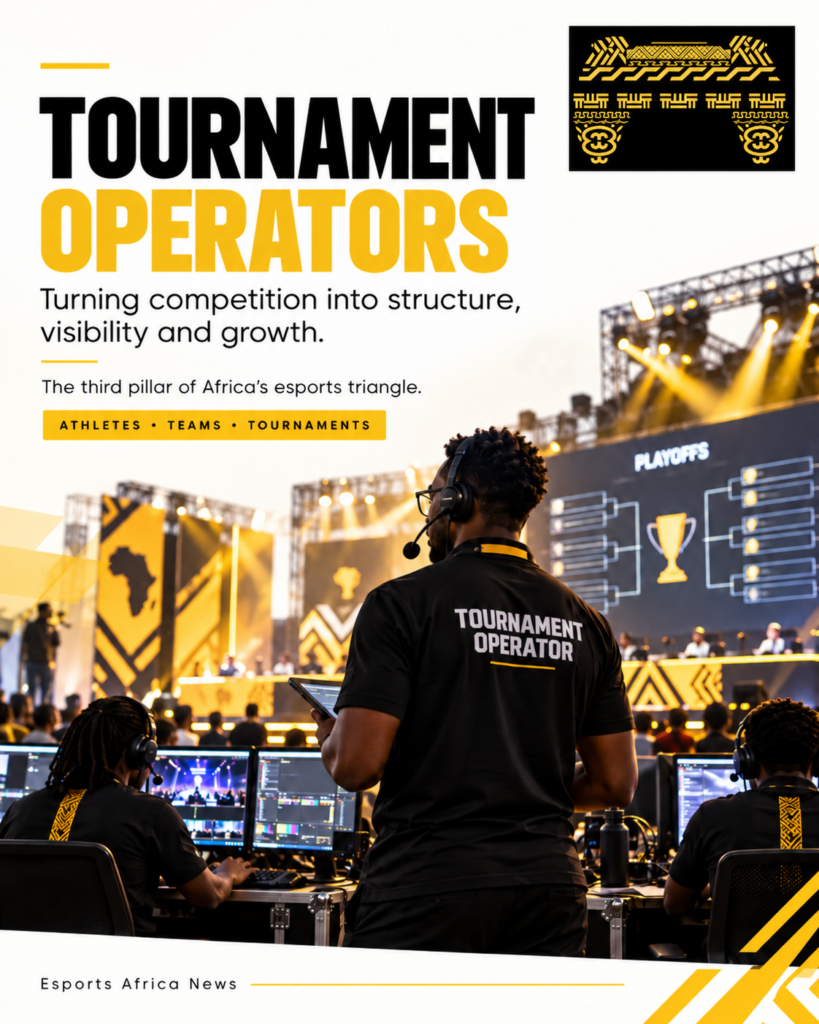
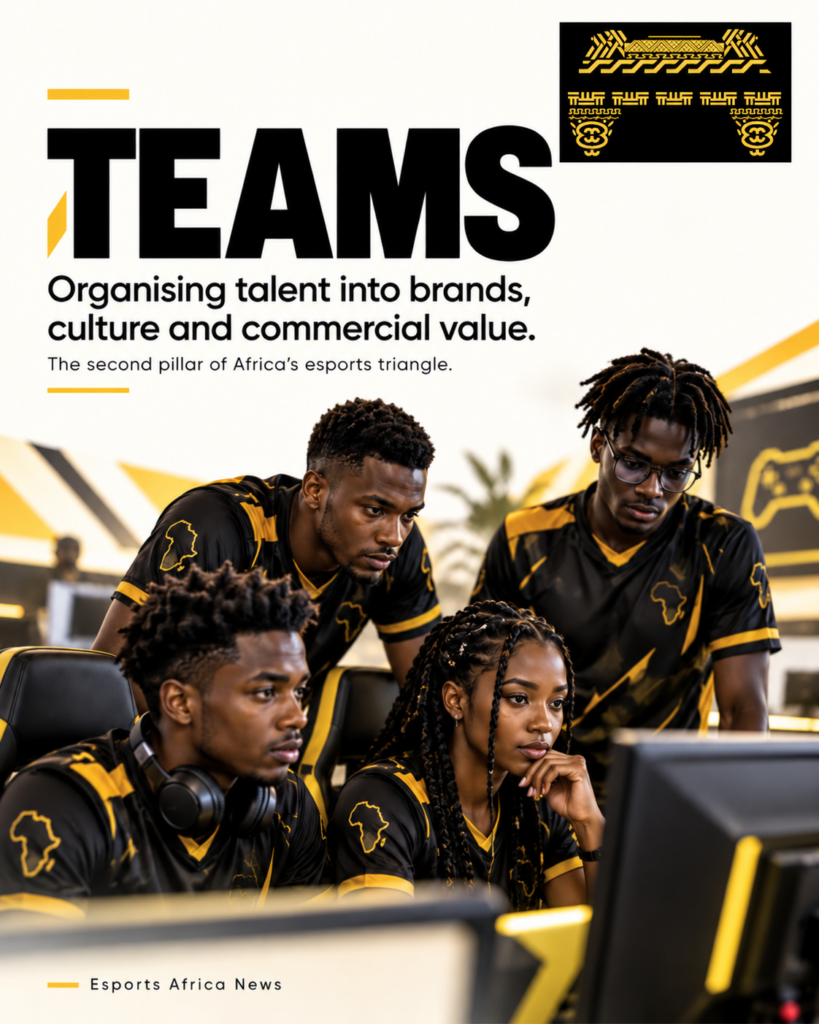
Every successful esports ecosystem depends on three interconnected stakeholders: athletes who deliver competitive excellence, teams that develop and commercialise talent, and tournament operators that create opportunities for competition, visibility and revenue.
Their relationship should be mutually beneficial.
Athletes need teams for professional development, financial support, representation and career progression. Teams need credible competitions to establish their reputation, attract sponsors and generate commercial value. Tournament operators need competitive athletes and recognisable teams to attract audiences, broadcasters, publishers and investors.
Remove any one of these relationships and the entire structure weakens.
Across Africa, however, the challenge is not simply the absence of these stakeholders. It is the limited coordination between them.
Africa has built a growing culture of esports participation. It has not yet consistently converted that participation into a functioning commercial ecosystem.
What Africa is getting right
There are encouraging developments.
In South Africa, ACGL has demonstrated the importance of predictable competition. Its move towards structured seasons, ranked ladders and divisional competitions gives players reasons to remain active beyond individual tournament weekends.
The African Gaming Championship 2026 also offered more than R150,000 in advertised prize money across several competitive titles, illustrating how organisers can create platforms for multiple gaming communities.
Across the continent, competitions in titles such as PUBG Mobile, Free Fire, Call of Duty Mobile, eFootball and Tekken are giving emerging athletes opportunities to compete beyond their immediate communities.
International publishers are also expanding competitive pathways. Garena’s 2026 Free Fire roadmap increased global finals participation from 18 to 24 teams, creating broader opportunities for emerging regions, although access remains dependent on regional allocations and qualification structures.
These developments matter. They demonstrate growing operational capacity, demand for organised competition and the potential for international participation.
Yet tournament activity alone does not establish industry maturity.
The missing relationships
1. Athletes compete, but who develops their careers?
Too many African esports athletes depend on personal funds, family support or occasional tournament winnings.
Participation can require equipment, internet subscriptions, travel, accommodation and substantial training time. Without predictable income, athletes cannot always commit to competitive development.
The result is a cycle in which promising players emerge, achieve recognition and disappear from competition because continued participation becomes financially unsustainable.
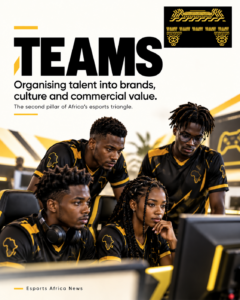
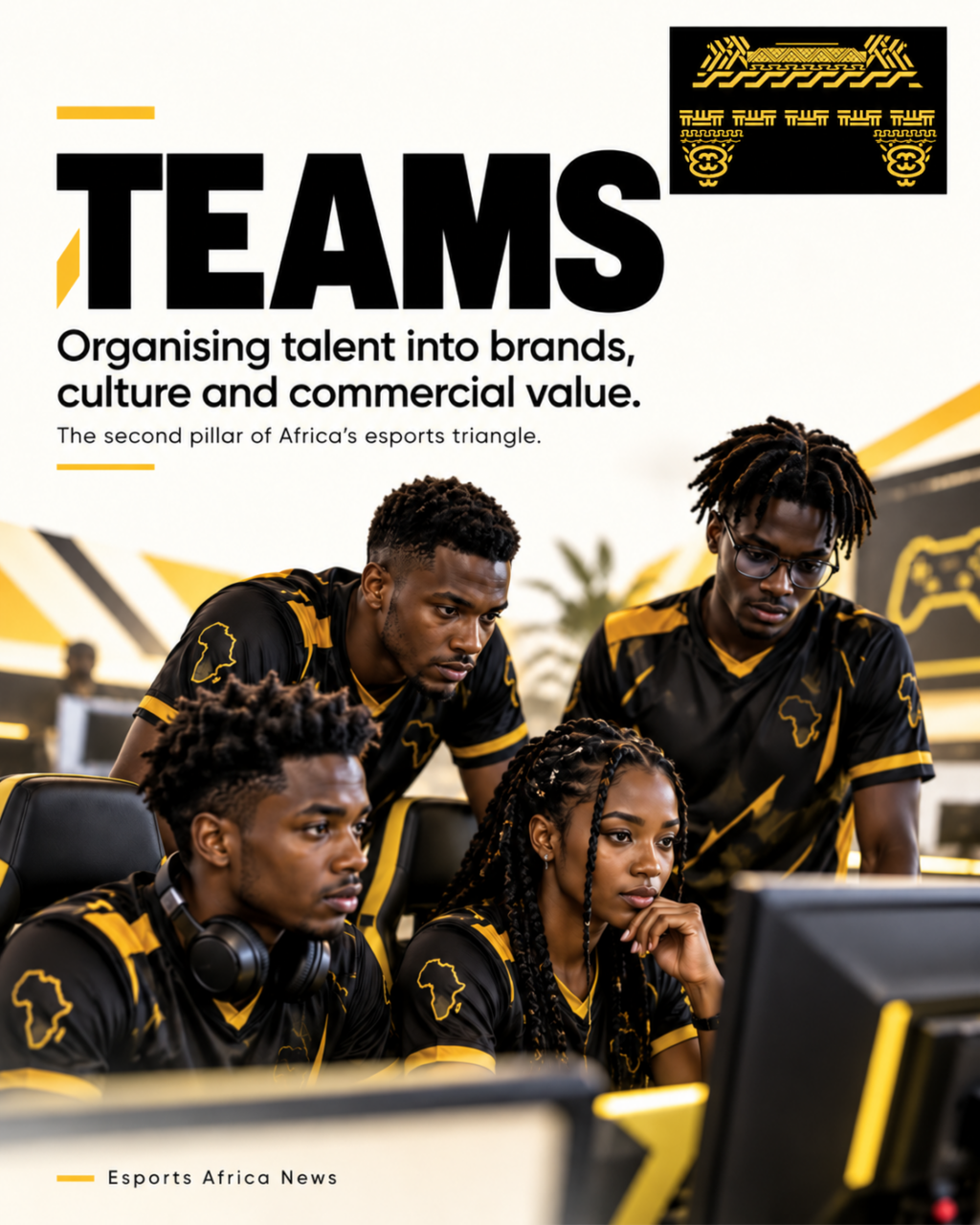
Teams should provide structured development, coaching, safeguarding and commercial representation. However, not every organisation calling itself an esports team has the resources or management structure to deliver these services.
Athletes also need written agreements covering prize-money distribution, image rights, sponsorship income, transfer arrangements and contract termination.
An athlete should not have to choose between competitive ambition and basic financial security.
2. Teams exist, but where is their business model?
African esports has numerous teams and gaming communities. Many depend on passionate founders, volunteers and short-term sponsorship.
The commercial problem is straightforward: winning competitions does not automatically generate recurring revenue.
Prize pools are irregular. Sponsorship agreements may be limited to individual events. Merchandise requires purchasing power, and audience engagement does not necessarily translate into paying customers.
Teams must become commercial organisations rather than merely groups of talented players sharing a name.
This requires financial planning, audience development, sponsorship inventories, player development programmes and measurable commercial propositions.
Tournament operators can help by introducing team partnership packages, season-long visibility, licensed merchandise opportunities and appropriate revenue-sharing arrangements.
But teams must contribute something in return: reliable participation, professional conduct, audience engagement and compelling athlete stories.
3. Tournament organisers stage events, but what happens afterwards?
Across Africa, tournaments are frequently judged by registration figures, prize pools, production quality and social media impressions.
These indicators matter, but they are insufficient.
An event attracting hundreds of players may generate excitement without creating lasting economic opportunities.
The questions should be more demanding.
How many athletes returned for another season? How many secured team contracts? Did participating teams acquire commercial partners? Were prize payments completed promptly? Did the organiser retain sponsors?
Tournament operators need to think beyond event delivery towards developing sustainable competitive circuits.
This means consistent calendars, transparent rules, credible officiating, anti-cheating systems, dispute resolution, verified results and published prize-payment procedures.
Without these protections, participation becomes a gamble rather than a professional opportunity.
The commercial disconnect
Perhaps the greatest weakness is that athletes, teams and organisers often approach sponsors independently.
An athlete offers personal visibility. A team offers its brand. An organiser offers event exposure.
Each is selling a small component of what could become a much stronger commercial product.
Imagine a sponsor supporting an annual African esports league involving 20 teams, 100 athletes, recurring broadcasts and year-round digital storytelling.
That partnership could deliver measurable reach, consistent brand exposure and community engagement.
Instead of competing for the same limited sponsorship budgets, stakeholders could collaborate to attract larger investments.
Independent media organisations also have an important role in documenting performances, building athlete profiles and producing credible audience data.
What must change before 2027?
Africa needs a practical framework built around shared responsibilities.
1. Establish an African competitive calendar. Organisers should coordinate national, regional and continental competitions, reducing scheduling conflicts and establishing progression routes.
2. Introduce minimum professional standards. Teams and operators should adopt player agreements, safeguarding policies, payment obligations and independent dispute-resolution procedures.
3. Create sustainable commercial partnerships. Multi-event sponsorship, transparent revenue-sharing and joint marketing should replace dependence on isolated prize pools.
4. Build an athlete and team database. Verified results, rankings, performance histories and audience metrics would make talent more visible to investors and sponsors.
5. Develop a clear competition pyramid. Grassroots tournaments should connect to regional leagues, continental championships and international qualification opportunities.
6. Measure commercial outcomes. Operators should publish participation, retention, viewership and payment-performance indicators, with appropriate protections for commercially sensitive information.
Who must lead?
Tournament operators should initiate greater coordination because they control much of the competitive calendar and relationships with sponsors.
But they cannot dictate the ecosystem alone.
Teams need meaningful representation in competition planning, while athletes require a voice in decisions affecting eligibility, prize distribution and professional welfare.
Publishers must also participate because their intellectual property rights determine which competitions can operate and how games can be commercialised.
A voluntary African esports stakeholder council, with published standards and no exclusive control over competitions, could help establish this cooperation.
The bigger question
Africa does not lack esports ambition. It lacks enough enduring commercial relationships to convert ambition into opportunity.
More tournaments will create more winners. More teams will create more brands. More athletes will create greater competition.
But none guarantees a sustainable industry.
The real breakthrough will come when an athlete’s development strengthens a team, a team’s success increases a tournament’s value, and that tournament generates sufficient commercial returns to invest in the next generation.
That is the triangle African esports must build.
And the time to build it is now.