
Beyond the Screens: What CZY Esports Game Day 2.0 Built for Kenya’s Gaming Community
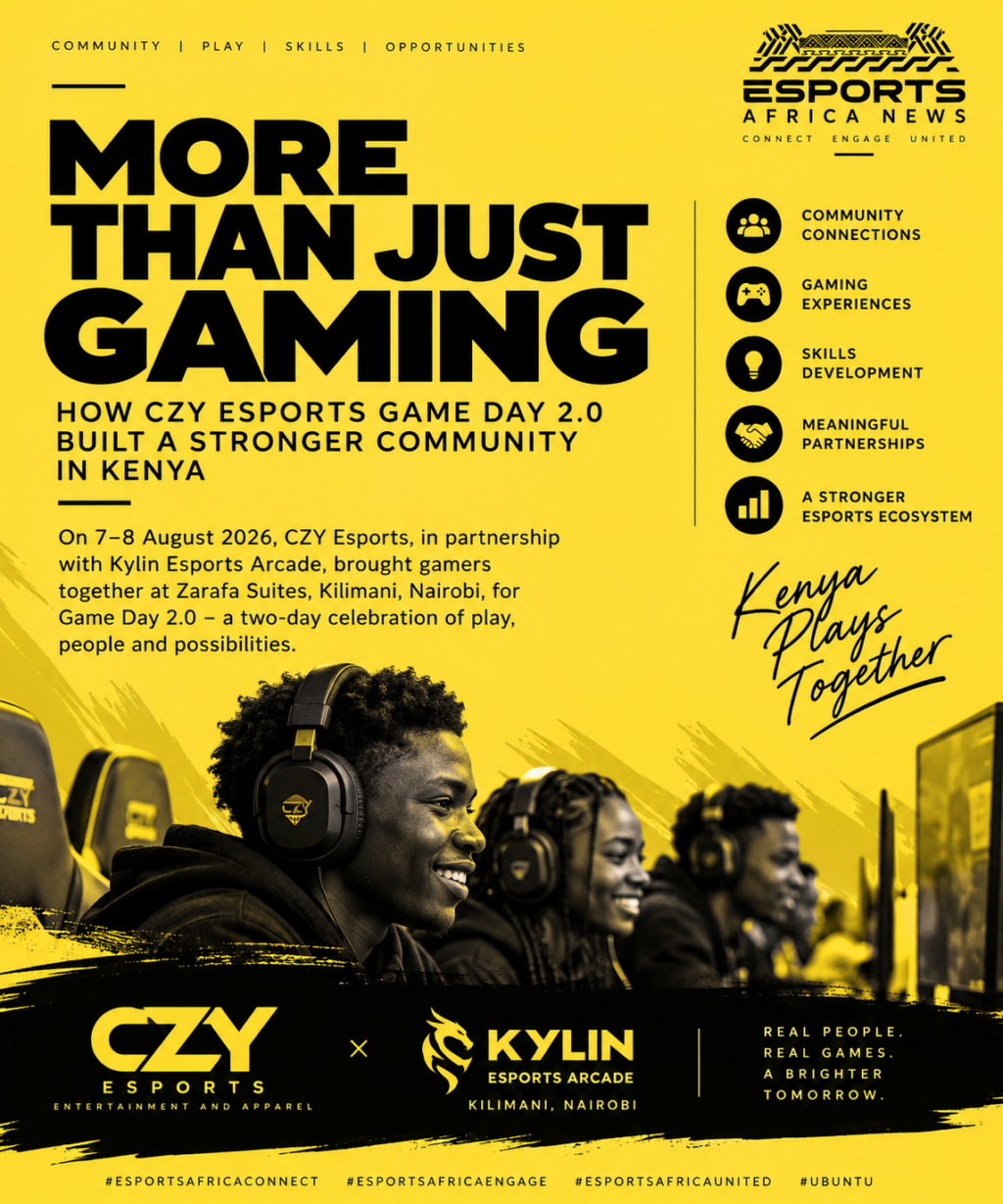
CZY Esports Game Day 2.0 was more than a weekend of gaming. It offered another glimpse of how Kenya’s esports ecosystem can be built from the community upwards.
The most important outcome of a gaming event is not always found on a leaderboard.
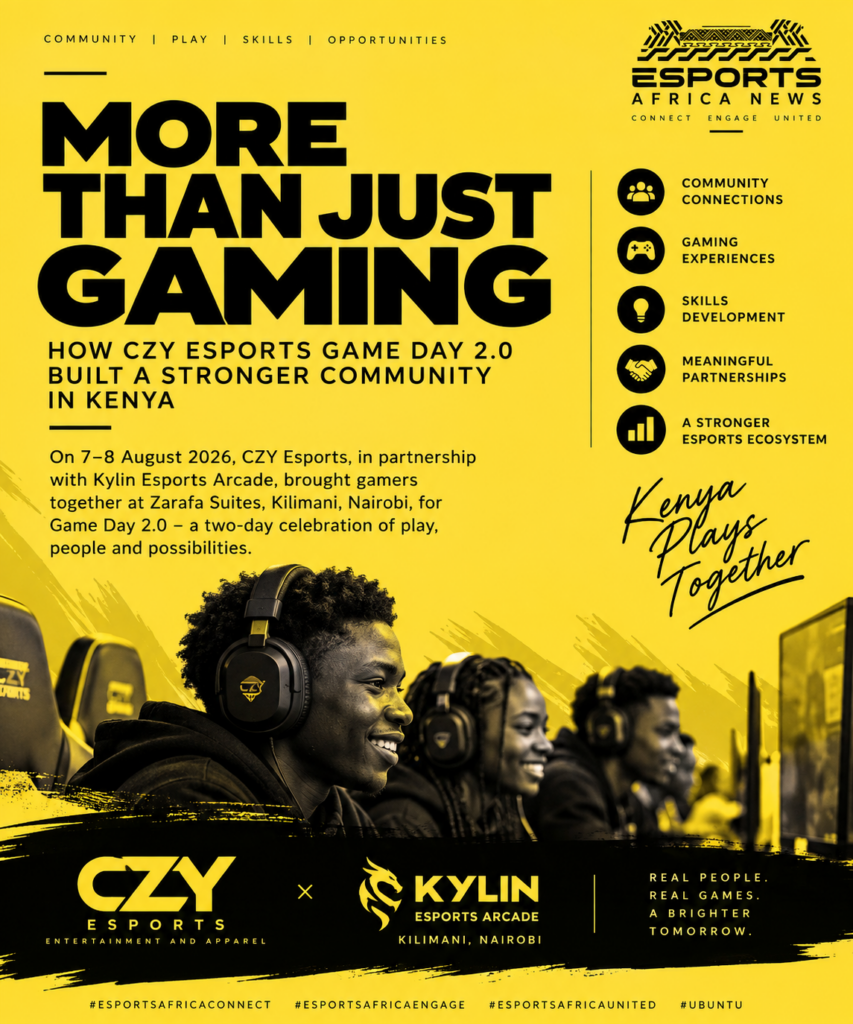
On 7–8 August 2026, CZY Esports brought its Game Day concept back to Nairobi for Game Day 2.0, hosted in partnership with Kylin Esports Arcade at Zarafa Suites, Kilimani.
Across the two-day activation, gamers were brought into a shared environment built around play, competition, interaction and community. With access to more than 40 high-performance gaming PCs and over 100 games, the venue provided the infrastructure for players to experience different titles, take part in Fortnite customs and gaming challenges, and, crucially, meet other people within Kenya’s gaming scene.
But the significance of Game Day 2.0 went beyond the machines.
Turning Online Connections Into Real Communities
African gaming communities are already large and highly active online. The harder task is converting that digital participation into durable local ecosystems.
Game Day 2.0 demonstrated one way of doing it.
Bringing players, enthusiasts and creators into the same physical space created opportunities for interaction that are difficult to reproduce entirely through Discord servers, WhatsApp groups or social-media feeds.
Players could meet other players. Newcomers could experience gaming on higher-performance equipment. Creators could interact with their audiences and peers. Competitive gamers could test themselves against others without the atmosphere being dominated solely by prize money or professional competition.
The outcome was therefore not simply gaming activity. It was community formation.
Access Is Part of the Esports Equation
The event also highlighted a practical reality of African esports: talent alone is not enough.
Hardware, connectivity, venues and access remain important barriers in many markets. Not every promising player can own a high-performance gaming PC or maintain the infrastructure required to compete consistently.
This makes partnerships between esports organisations and gaming venues particularly important.
CZY Esports’ collaboration with Kylin Esports Arcade showed how existing gaming infrastructure can be transformed into something broader: a meeting point, competition space, discovery platform and community hub.
For Kenya, that matters.
A sustainable esports ecosystem needs more than occasional large tournaments. It requires places where people can play regularly, meet each other, improve their skills and develop relationships before the cameras and major sponsors arrive.
The Outcomes That Matter
Game Day 2.0 produced several important outcomes for the community.
It created greater access to quality gaming infrastructure. It provided a physical meeting point for Kenya’s gaming community. It encouraged interaction between casual and competitive players. It created space for gaming challenges and organised competition without making competition the only purpose of participation.
Perhaps most importantly, it strengthened the relationship between CZY Esports and Kylin Esports Arcade, demonstrating what can happen when an esports organisation and a gaming venue build around a shared community objective.
There are also less visible outcomes.
A player meeting a future teammate. A newcomer discovering competitive gaming. A creator finding a collaborator. A participant learning about another game. A young gamer realising that esports includes organisers, content creators, community managers and other opportunities beyond becoming a professional player.
These outcomes rarely appear in tournament statistics. Yet they are fundamental to ecosystem development.
From Events to Infrastructure
There is an important lesson here for African esports.
The continent does not merely need more tournaments. It needs repeatable community structures.
One-off events can generate excitement. Recurring activations create habits. Habits create communities. Communities eventually create audiences, talent, businesses and commercially attractive ecosystems.
That is why initiatives such as CZY Esports Game Day deserve attention.
If Game Day continues to develop as a recurring platform, its value will increasingly be measured not simply by attendance at an individual edition, but by retention: how many people return, how many new players enter the community and how many relationships formed during these gatherings develop into teams, projects, businesses or careers.
Kenya Is Quietly Building
Kenya’s gaming industry does not need to wait for somebody else to build its ecosystem.
Game Day 2.0 offered evidence of what can already be achieved locally when community, infrastructure and partnership are placed in the same room.
CZY Esports has indicated that further events, partnerships and initiatives are being developed. The challenge now is to convert the momentum generated by individual Game Days into something consistent and scalable.
That means more regular activations, stronger partnerships, better data collection, greater inclusion of creators and grassroots players, and eventually deeper involvement from publishers, technology companies and non-endemic brands.
Africa’s esports future will not be built by tournaments alone.
It will be built in gaming cafés, community spaces, universities, local competitions and gatherings where people repeatedly come together around games.
CZY Esports Game Day 2.0 has already happened. Its more important question is what happens next.
Because when the screens switch off and people still want to come back, an event has achieved something considerably more valuable than a weekend of gaming.
It has started building a community.