Kenya’s Next Digital Frontier: Why NAICCON’s Mini Con Is a Defining Moment for African Gaming
Kenya has spent the last decade quietly assembling many of the ingredients required for a thriving digital economy. Its fintech leadership, expanding technology sector and vibrant creative industries have attracted global attention. Now, another industry is rapidly joining that conversation. Gaming and esports are emerging as strategic pillars of Africa’s creative economy, and NAICCON’s upcoming Mini Con – Gaming Event represents one of the clearest demonstrations yet of where that future is heading.
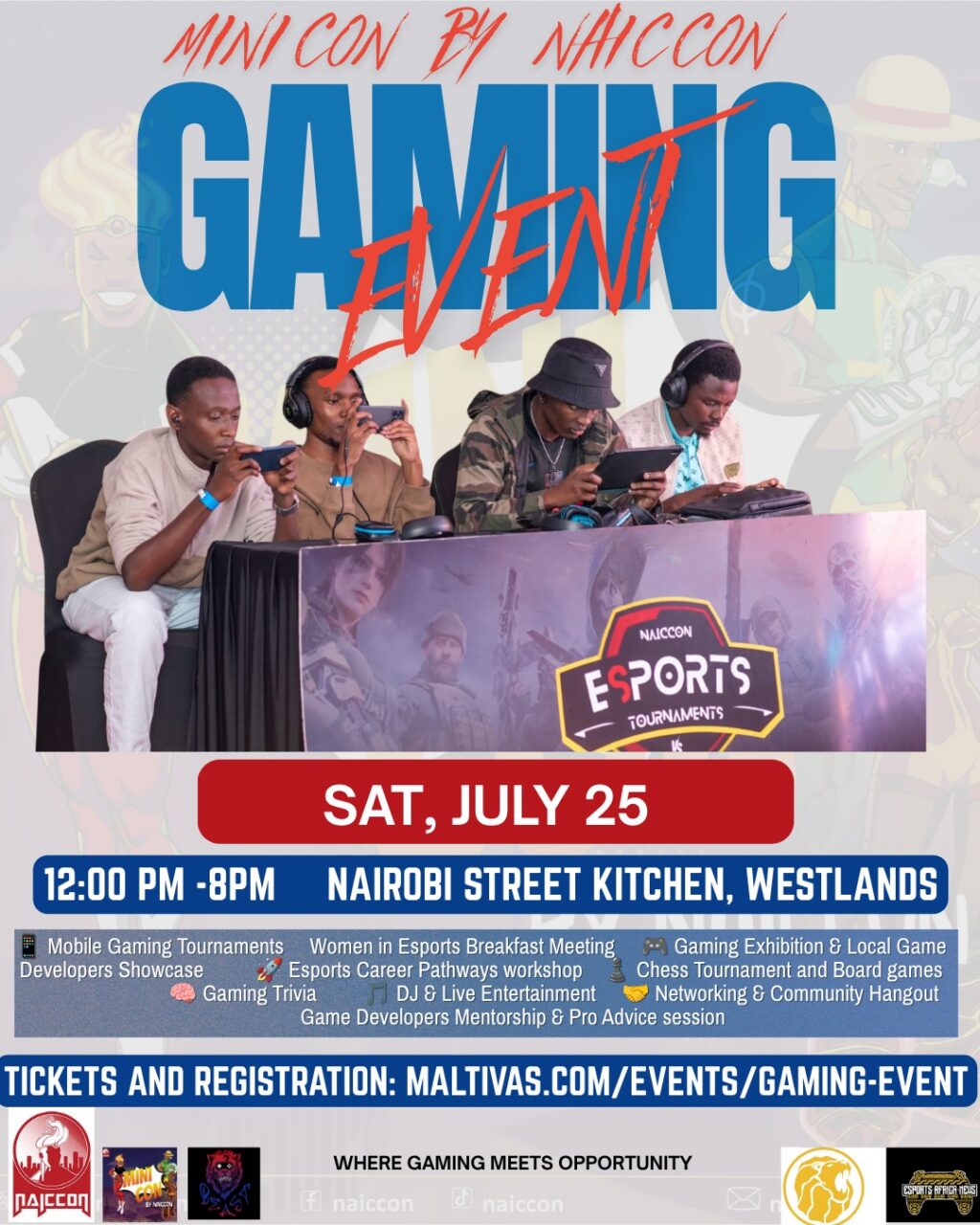
On 25 July 2026, Nairobi Street Kitchen in Westlands will become more than a venue for competitive gaming. It will become a meeting point for developers, esports athletes, investors, creators, students, technology companies and entrepreneurs who increasingly recognise that gaming has evolved into an economic sector capable of generating employment, innovation and intellectual property.
The significance of the event extends well beyond Kenya.
Across Africa, conversations around gaming have matured considerably. Governments are beginning to acknowledge esports as a recognised sporting discipline. Universities are introducing game development programmes. Investors are paying closer attention to African studios, while global publishers continue searching for new markets and authentic stories. Against this backdrop, NAICCON is demonstrating that successful ecosystems are not built through tournaments alone, but through communities.
Since its establishment in 2014, NAICCON has steadily transformed itself from a grassroots comic convention into one of East and Central Africa’s most influential creative platforms. Its work now spans gaming, esports, animation, comics, digital art, technology, cosplay, music and emerging media, creating year-round opportunities through mentorship, exhibitions, competitions and industry partnerships.
Mini Con is a natural extension of that vision.
Rather than presenting gaming as isolated entertainment, the event places it within the wider creative economy. This distinction is important. Around the world, the most successful gaming ecosystems are those that integrate education, entrepreneurship, technology and culture. Kenya appears increasingly determined to follow that model.
The organisers expect more than 500 physical attendees alongside a digital reach exceeding one million impressions, reflecting the growing appetite for gaming content among young Africans. While attendance figures are encouraging, the real value lies in the diversity of participants who will share the same space.
Competitive mobile esports tournaments will provide excitement for players and spectators alike. Kenya’s mobile-first digital economy makes mobile esports particularly relevant, offering accessible competitive opportunities without the high infrastructure costs associated with PC gaming. This mirrors a broader continental trend that Esports Africa News has consistently identified as one of Africa’s greatest competitive advantages.
Equally significant is the attention given to local game development.
Africa’s gaming future cannot rely solely on consuming international titles. Sustainable industry growth depends upon creating African intellectual property capable of reaching global audiences. The Indie Games Showcase and developer mentorship sessions therefore represent some of the event’s most strategically important components, providing emerging studios with visibility while connecting aspiring developers with experienced industry professionals.

Every successful gaming ecosystem eventually becomes an innovation ecosystem.
Today’s independent developer can become tomorrow’s internationally recognised studio. Today’s student learning game design could become tomorrow’s founder exporting African digital products to global markets. Events such as Mini Con accelerate those journeys by reducing the distance between ambition and opportunity.
Another encouraging feature is the dedicated Women in Esports session.
Gender diversity remains one of the industry’s biggest global challenges. Creating intentional platforms where women can network, exchange experiences and develop professional opportunities is essential if Africa is to build an inclusive esports ecosystem from the outset rather than attempting to correct structural imbalances later.
Career development also receives welcome attention.
Many young Africans continue to associate gaming exclusively with professional competition. The reality is considerably broader. Broadcasting, event production, community management, marketing, software engineering, content creation, publishing, animation and game design all represent viable career pathways within the gaming industry. By showcasing these opportunities, NAICCON is helping redefine public perceptions of what gaming can become for African youth.
This shift in narrative matters.
Africa possesses one of the world’s youngest populations, rapidly expanding smartphone adoption and an increasingly sophisticated digital economy. These structural advantages position the continent to become not merely a consumer of games but an important producer of gaming innovation.
Kenya has already demonstrated leadership across several technology sectors. Gaming now appears ready to join that list.
For the wider African ecosystem, Mini Con offers another reminder that regional growth will not be driven by a single flagship tournament or one major international investment. Instead, it will emerge through dozens of locally organised events that consistently nurture talent, connect stakeholders and create commercial opportunities throughout the year.
This community-first approach has already proven successful in mature esports markets around the world. Africa’s version will inevitably reflect its own unique strengths, cultures and entrepreneurial spirit.
NAICCON deserves recognition for understanding this distinction.
By bringing together gamers, developers, technology companies, creators and industry leaders under one roof, the organisation is helping build infrastructure that extends far beyond a single day of competition. It is investing in relationships, knowledge exchange and ecosystem development.
These are precisely the foundations upon which sustainable gaming industries are built.
As Africa’s gaming economy continues its upward trajectory, events such as Mini Con will increasingly become indicators of regional maturity. They demonstrate confidence in local talent, encourage investment in creative industries and showcase African innovation to domestic and international audiences alike.
For Kenya, Mini Con represents another milestone in its evolution as one of Africa’s leading digital innovation hubs.
For Africa, it offers another compelling example that the continent’s gaming future is no longer being imagined.
It is already being built.