LEVEL UP AFRICA: How Esports & Game Development Are Powering a Tourism Boom — Happy World Tourism Day 🎮✈️🌍

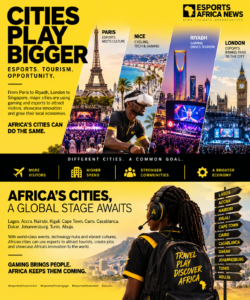
Today — World Tourism Day — we celebrate a new kind of travel: fans, players and creators flocking to African cities for big tournaments, conventions and game-development hubs. From Lagos to Nairobi, Casablanca to Accra, esports is already filling hotel rooms, selling flights and creating jobs — and the pipeline is only getting bigger.
Here is a what Esports Africa News researched and discovered, shareable deep dive on how esports + game development are boosting African tourism, real examples of events on the ground, hard research that backs the case, and a short playbook showing how African organisers and communities can win.

Big tournaments = real tourism (with real numbers)
Esports events draw three groups who travel: competitors (teams & staff), fans, and industry visitors (casters, sponsors, developers). When those people arrive they spend on flights, hotels, food, transport and side-tourism — exactly like any sports tourist.
- Carry1st’s Africa-level Call of Duty: Mobile competitions are running LAN finals in Lagos with a headline prize pool and regional qualifiers — events that draw teams and spectators to the city and conference venues.
- The PUBG Mobile / PUBG Mobile Africa Cup staged in Nairobi (Charter Hall) is an example of a regional finals that concentrates players, staff and fans for multi-day play and broadcast.
- Ghana’s Accra Esports Week packages meetups, tournaments and industry showcase, timed to bring visitors into Ghana’s hospitality ecosystem.
- South Africa’s esports scene (events such as rAge and locally backed club tournaments) fills convention halls and exhibition centres, generating measurable footfall.
Smaller and mid-tier esports events already behave like established sports tourism: attendees show high propensity to spend, stay multiple nights and attend side-events (merch, food, tourism). Academic research and tourism analyses identify esports events as a growing opportunity for destination competitiveness because they stimulate hospitality, transport, retail and tech sectors.
https://www.instagram.com/reel/DPGVVnmDDUT/?igsh=MWxqdjVmemw5dzQ4dQ==
A conservative economic example (how the money flows)
Let’s do a conservative, honest example for organizers and city planners to visualise scale:
- If a mid-sized LAN final brings 3,000 unique visitors (teams, staff, fans, industry) who each spend $400 locally (2–3 nights’ hotel, food, local transport, tickets, merch), direct local expenditure = $1.2 million.
- Add vendor income, broadcast teams and sponsorship activation, and a simple multiplier (supply chain + wages) makes a plausible $1.8–$2.5M total impact in the host city. (This is an illustrative model; event-specific studies and local multipliers will refine it.)
Why conservative? Because high-profile international events can produce much higher per-visitor spending and longer stays — proven in other event economies worldwide. These scaled impacts translate into hotel occupancy, F&B revenue, taxi/ride revenue, temporary employment and new business for local creative industries. (See academic and industry analyses on esports’ tourism potential.)
Socio-economic wins: jobs, skills and small businesses
Esports tourism isn’t just “one night of spending.” It builds durable local capacity:
- Direct jobs — event staff, venue techs, security, hospitality workers, local broadcast crews.
- Gig and vendor income — food stalls, merch sellers, Tuk-Tuk drivers, local guides, translators.
- Talent pipeline — voice actors, local shoutcasters, video editors and developers get paid and gain exposure to international partners.
- Infrastructure legacy — venues upgraded for esports can host conferences, concerts and future tournaments.
- Skills transfer — workshops, bootcamps and dev jams that run alongside events build long-term game development ecosystems.
Academic studies list these categories as the major socio-economic benefits when destinations deliberately cultivate esports tourism.
Here are real examples: champions of cross-border tourism
- Lagos — Carry1st / Call of Duty Mobile qualifiers & finals. Lagos’ large venues and strong youth market make it a magnet for regional teams and diaspora fans. These events bring international stream viewers who then travel for finals and activations.
- Nairobi — PUBG Mobile Africa Cup. Nairobi’s hospitality network and growing event scene (Charter Hall) make it a practical hub for East African teams and visiting fans.
- Casablanca / Morocco — eFootball and broader gaming festivals. Morocco recorded strong tourism growth in 2024 (millions of visitors), and hosting esports/eFootball showcases ties a digital youth audience to cultural tourism offers. (Tourism is already a major employer in Morocco.)
- Accra, Ghana — Accra Esports Week & national showcases. These events combine community tournaments with trade shows, exposing local studios and creators to regional buyers.
- South Africa — rAge, club championships and exhibitor festivals. Large pop-culture events already pull tens of thousands; integrating esports programming amplifies the draw and fills hotels during low seasons.
- Pan-African titles (Blood Strike / Bloods Community Championship) organised by Esports Africa Tournament show grassroots-to-continental progression, giving organisers the credibility to attract regional partners and sponsors.
What upcoming events mean for organisers & local ecosystems
Upcoming qualifiers, regional cups and LAN finals are opportunities for African organisations to move from “participant” to “host & exporter”:
- Revenue streams: ticketing, sponsorship, media rights, local vendor fees and government support.
- Brand lift: organisers build a track record that attracts larger international events and sponsors.
- Partnerships: local hotels, airlines and tourism boards can co-package tickets + travel + city tours.
- Sustainability & scheduling: by aligning esports calendars with lower tourist seasons, cities can smooth hotel occupancy year-round.
Already, global tourism forecasts expect continued growth in international arrivals — meaning the timing is right for African cities to position esports as a tourism product.
Five practical wins for an African esports org that hosts a major event
- New revenue channels (tickets, sponsorship tiers, vendor fees).
- Sponsorship leverage — big brands value youth audiences and measurable footfall.
- Local economic partners — hotels, airlines and tourism boards willing to co-invest in promotions.
- Talent discovery & retention — local players and devs get exposure; long-term rosters and teams grow.
- Legacy assets — venues, production crews and broadcast capability that power future events and content production.
Quick playbook — how to turn an esports event into a tourism success
- Package tours + tickets: bundle match tickets with city tours, local cultural experiences and discount hotel rates.
- Work with tourism boards: include esports events in national tourism calendars; use ambassadors and influencer streams.
- Activate local creators: side-events (dev jams, cosplay, music) extend visitor stays and spending.
- Measure impact: collect guest origin, length of stay, and spending data to build a quantifiable ROI for sponsors and governments.
- Train locally: run production and broadcast training in advance so hiring is local and wages stay local.
African Esports Federations and Associations on this day -World Tourism Day engage with and ask for governments, brands and organisers to partner on boosting tourism.
On this World Tourism Day, the message is simple: invest in esports and game development and you don’t just host a tournament — you create a tourism product that attracts youth, diaspora and industry visitors, builds creative economies, and fills hotels in ways traditional tourism can’t. Countries that combine policy support, infrastructure and partnership with the private sector will see the biggest returns.