Nigeria at Gamescom 2026: From Gaming Market to Games Industry
Nigeria’s games industry has spent much of the past decade demonstrating that it exists. At Gamescom 2026, the more consequential task will be proving that it can do business.
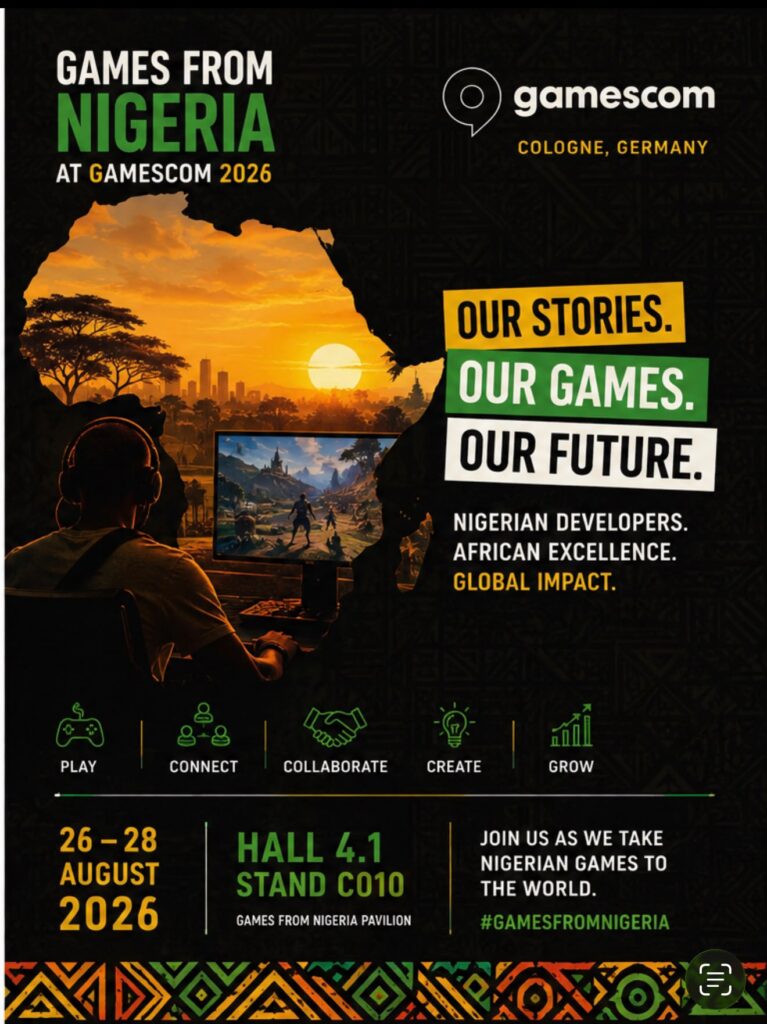
From 26–28 August, the Games from Nigeria delegation will occupy Hall 4.1, Stand C010 in Cologne. Its programme includes game showcases, developer presentations, publishing discussions and an Africa Games Industry Mixer in association with SpielFabrique and Xsolla. Behind the exhibition lies a larger economic question: can Nigeria convert its considerable gaming audience and creative talent into globally competitive intellectual property?
Nigeria has an obvious advantage scale. Its large, young and increasingly connected population makes it one of Africa’s most important consumer markets. Yet consuming games and capturing value from their production are different propositions.
A successful domestic games industry creates demand for programmers, artists, animators, writers, musicians and producers. More importantly, intellectual property can generate revenue far beyond an initial game through sequels, licensing, merchandising, animation and other media. Nigeria’s opportunity is therefore not merely to increase gaming consumption, but to own more of what its consumers and eventually global audiences play.
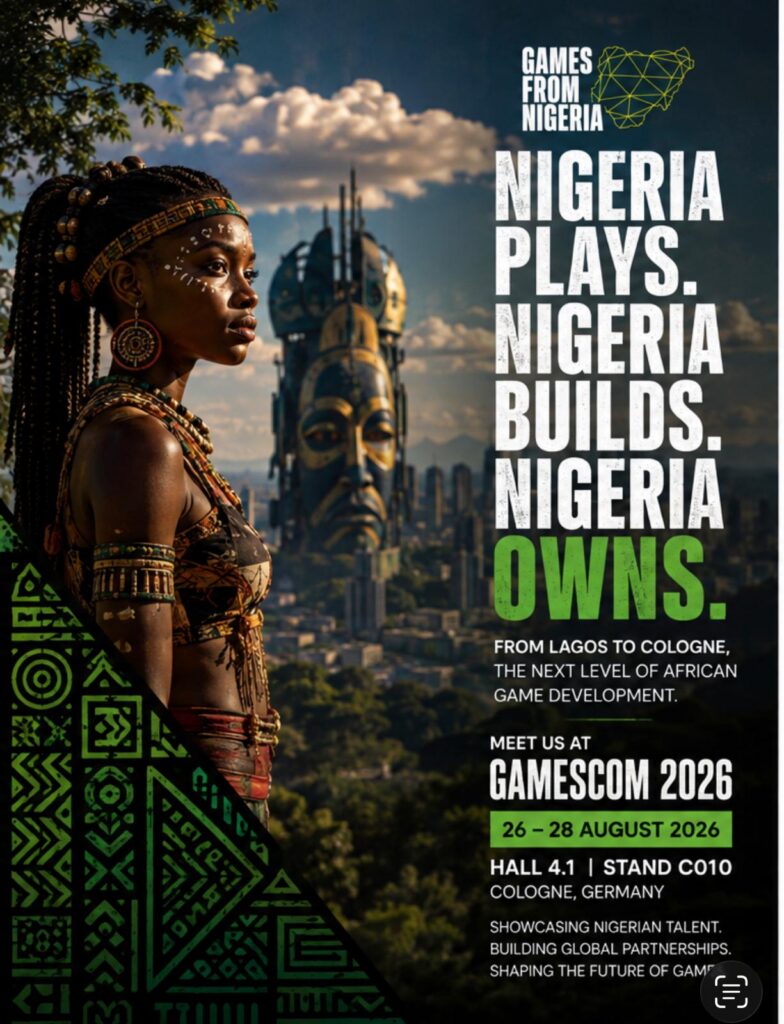
The Gamescom programme reflects this commercial imperative. The opening day combines playable showcases with an introduction to Nigeria’s games industry and meetings with developers. Thursday turns towards publishing and partnerships, culminating in an industry mixer designed to connect African developers with publishers, investors and other commercial partners.
These connections matter because Nigeria’s principal constraints are increasingly not creativity alone. Capital, distribution and discoverability remain formidable obstacles.
Making a good game is expensive; getting players to discover it in an overcrowded global marketplace can be harder still. For smaller Nigerian studios, a publishing agreement, technology partnership or co-development contract secured through Gamescom could prove considerably more valuable than publicity alone.
There is also a continental dimension. Africa’s games industry remains fragmented, with expertise and capital scattered across markets including Nigeria, South Africa, Kenya, Ghana and others. International gatherings offer developers an opportunity not only to sell individual titles but to demonstrate that Africa is developing a credible production ecosystem.
The test of Nigeria’s Gamescom appearance should therefore come after the exhibition halls close.
Visitor numbers and photographs provide useful publicity, but they are poor measures of industrial progress. The more important questions are whether Nigerian developers secure publisher negotiations, investment leads, distribution agreements and international customers.
Nigeria has already shown through Nollywood and Afrobeats that locally produced culture can become an international commercial product. Games represent a potentially valuable next frontier because they combine cultural production with software, technology and scalable intellectual property.
Gamescom will not transform Nigeria’s games industry in three days. But it can help move the sector from visibility towards transactions.
For Nigeria, that distinction matters. The long-term prize is not simply having Nigerian games displayed in Cologne.
It is building Nigerian companies capable of creating, exporting and most importantly owning globally valuable gaming intellectual property.