Xsolla and the Global Esports Federation Bet on the Infrastructure Behind Global Esports
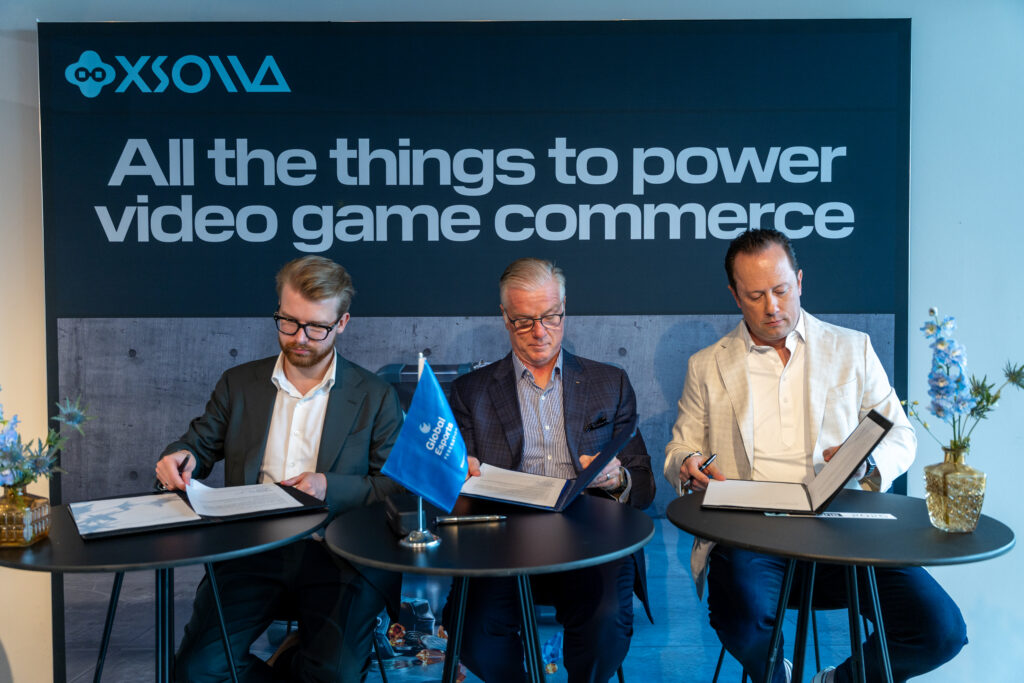
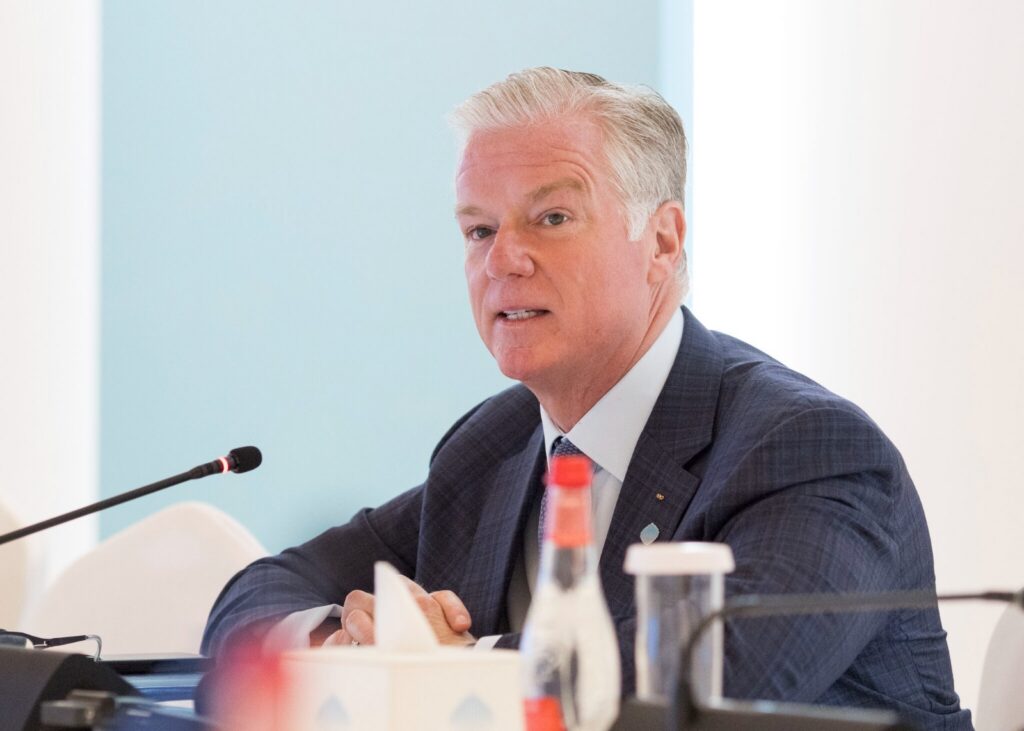
L-R_Rytis Joseph Jan_Sir Paul J Foster_Rytis Joseph Jan
A five-year partnership could make cross-border payments, commerce and distribution easier. For Africa’s game developers and esports teams, the more important question is whether global infrastructure can translate into greater participation in the global games economy.
The global esports industry has rarely lacked audiences. What it has often lacked is infrastructure. Prize payments cross borders slowly, payment methods vary sharply between markets, federations operate different commercial systems and fans can struggle to buy tickets, merchandise or digital products outside their home countries.
A new five-year partnership between Xsolla and the Global Esports Federation (GEF) aims to tackle some of these frictions.
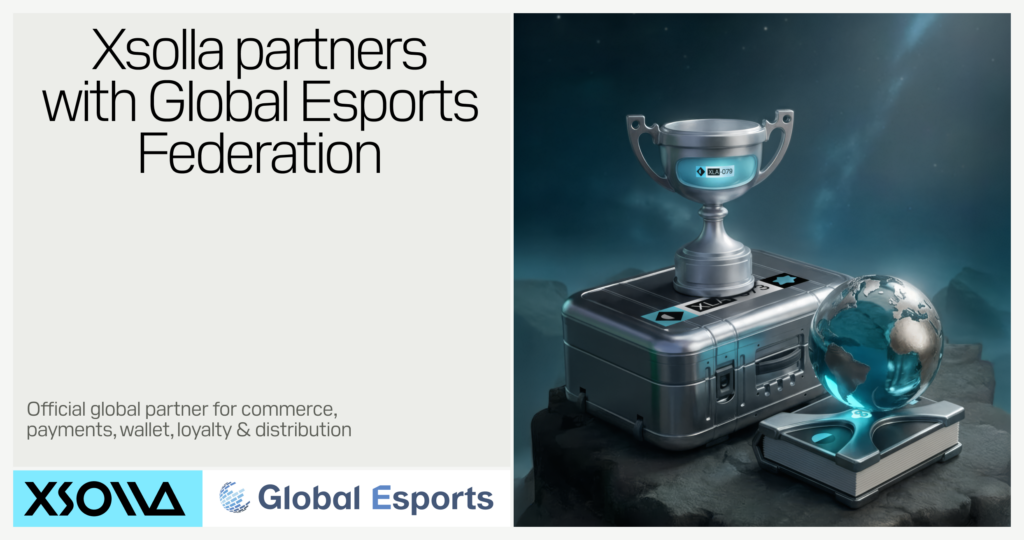
Announced at Gamescom 2026 in Cologne on August 26th, the agreement makes Xsolla GEF’s exclusive partner for commerce, payments, wallet, loyalty and distribution. Its technology will support the Global Esports Games, Global Esports Tour, GEFcon and GEF’s network of more than 180 member federations across five continents.
The partnership is scheduled to become operational at the Los Angeles 2026 Global Esports Games (GEGLA26) in December. Xsolla will effectively provide a common commercial layer across the GEF ecosystem, covering more than 200 markets and offering access to over 1,000 payment methods.
That sounds technical. Its consequences could be considerably more important.
Building the financial rails of esports
Esports has globalised faster than many of the systems supporting it. A tournament may involve players from dozens of countries while payments, registrations, merchandise sales and prize distributions remain dependent on an assortment of local platforms.
Xsolla and GEF want to consolidate much of this activity.
The planned infrastructure will handle digital goods, event tickets, merchandise, registrations and membership fees. A new GEF Wallet, integrated into the GEFx platform, is intended to support purchases as well as athlete prize-money payments, including local payout options, currency conversion and Know Your Customer and anti-money-laundering requirements.
A separate GEF Rewards programme will allow supporters to earn and redeem loyalty points across the Global Esports Games, Global Esports Tour and GEF’s digital properties.
For GEF, the attraction is standardisation. For Xsolla, it is an opportunity to extend infrastructure developed for the games industry deeper into organised competitive gaming.
“Esports has outgrown the infrastructure underneath it,” said Berkley Egenes, Xsolla’s Chief Marketing and Growth Officer, pointing to delayed athlete payments, fragmented federation systems and difficulties encountered by fans making purchases across regions.
Sir Paul J. Foster, GEF’s President and Chief Executive Officer, described the partnership as part of a broader effort to build a “digital super-highway” connecting gaming, esports, education, commerce and innovation.
Why Africa should pay attention
For Africa, the significance could be greater than simply making tournament payments easier.
African esports organisations routinely operate across markets in which international payment access, foreign-exchange conversion, digital commerce and cross-border settlements can create additional friction. An African player qualifying for an international tournament does not merely need the ability to compete; the surrounding financial system must also allow registrations, purchases and prize payments to function efficiently.
A genuinely global GEF Wallet could therefore reduce some of the administrative friction confronting African players and esports teams participating in GEF-sanctioned competitions. Receiving prize money through local payout rails and local currencies, subject to availability in individual markets and compliance requirements, would be particularly relevant for competitors operating outside the world’s largest financial centres.
There is also an opportunity for African federations. Common commerce infrastructure could make it easier to professionalise membership systems, registrations, merchandise and other revenue-generating activities. That matters because sustainable esports ecosystems cannot depend indefinitely on tournament sponsorship alone.
For African game developers, the implications are potentially broader still. Xsolla already provides payment, distribution, monetisation and direct-to-consumer services to game companies internationally. Connecting that network more closely to GEF’s federation ecosystem creates another possible bridge between competitive gaming and game development.
African studios have historically faced a familiar problem: making a good game is only part of the challenge. Distribution, payments, customer acquisition and monetisation across international markets are equally important. Greater exposure to global commerce infrastructure could help studios think beyond domestic storefronts and build products capable of reaching players internationally.
Yet infrastructure should not be confused with inclusion. African developers will benefit only if they can access the commercial opportunities surrounding the GEF ecosystem, while African teams will gain most if improved financial rails are accompanied by more qualification pathways, competitions, publisher relationships, sponsorship and investment.
That distinction matters. Connecting Africa to a payment network is useful; connecting African intellectual property, studios, athletes and businesses to global demand is considerably more valuable.
Six markets at a time
The partnership also establishes a Global Expansion Program, targeting at least six priority markets each year.
Its stated focus includes emerging markets in the Middle East, Central Asia, Southeast Asia and Latin America alongside major economies such as the United States, Britain, Germany, France, Japan, India, South Korea and China.
Africa is not specifically identified among the expansion regions listed in the announcement. That omission deserves attention.
GEF’s African member federations nevertheless sit within the wider partnership, and the continent represents precisely the sort of fragmented but rapidly developing digital market that global payment and distribution infrastructure is designed to address.
The opportunity for African federations will therefore be to move from membership to active commercial participation: making the case for African cities, competitions, studios and players to become part of future expansion programmes rather than merely consumers of infrastructure developed elsewhere.
Los Angeles will provide the first test
The first demonstration will come at GEGLA26. Xsolla and GEF plan to showcase digital goods, ticketing, merchandise, wallet services, rewards and athlete prize disbursement alongside joint executive programming and an industry reception involving international delegations.
It will provide an early indication of whether the partnership can turn an ambitious infrastructure agreement into something athletes, federations and supporters actually notice.
For African esports, that test is particularly relevant.
The continent does not simply need more tournaments. It needs the commercial architecture surrounding tournaments: reliable payments, monetisation, distribution, data, investment and mechanisms through which local organisations can participate in global value chains.
The Xsolla-GEF partnership will not solve Africa’s esports infrastructure challenge on its own. But if its global systems reach African markets effectively, it could remove several of the barriers that make participating internationally more difficult and expensive than it should be.
The larger opportunity is for Africa to use those rails in both directions: enabling its players to compete globally, while allowing its developers, federations, teams and intellectual property to sell globally.
That would represent a more consequential form of inclusion. Not merely connecting Africa to global esports, but enabling Africa to do business through it.
Esports Africa News | Connect. Engage. Unite.