$75 Million, 640 Brands, 200+ Clubs: Africa Should Be Studying What the Esports World Cup Really Built
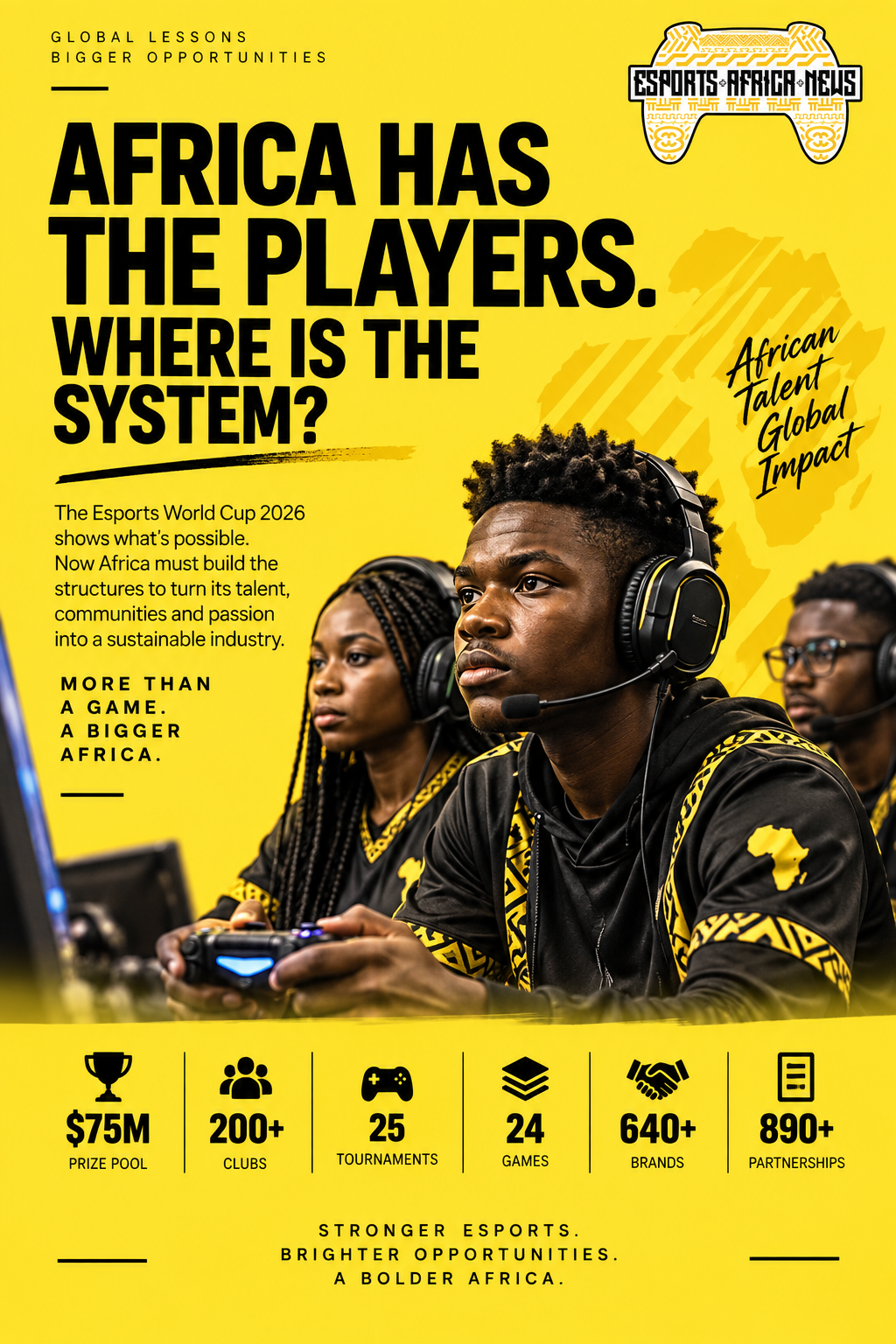
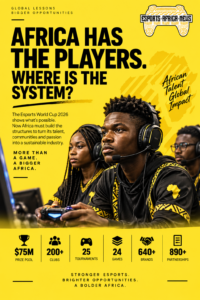
The Esports World Cup 2026 has become an extraordinary demonstration of what happens when competitive gaming is surrounded by serious commercial infrastructure. More than 200 clubs, 25 tournaments and 24 games sit within an ecosystem carrying a combined $75 million prize pool. Behind the competition is another remarkable number: analysis of 212 participating clubs identified more than 890 publicly disclosed sponsorship relationships involving over 640 different brands. Forty organisations are also part of the EWC Club Partner programme, receiving financial and strategic support intended to help them develop beyond simply winning matches.
But perhaps the most important number for Africa is 86.3%. That is the proportion of identified brands sponsoring just one club. The commercial ecosystem is therefore not being sustained only by a handful of multinational giants. Hardware leads the sponsorship market, accounting for 27.1% of recorded partnerships, but money is also coming from food and beverage, financial services, telecommunications, fashion, automotive, healthcare, travel, consumer electronics, entertainment and even public institutions. This is what mature esports begins to look like: clubs are not merely competitive teams. They become media properties, communities, marketing platforms and businesses capable of creating different forms of value for different industries.
Africa should pay close attention. The continent does not need another conversation about whether young Africans play video games. They do. Nor should the objective simply be to create bigger prize pools. The more difficult question is whether African esports organisations have built something businesses can confidently invest in. Where are the audited audience numbers, sponsorship inventories, commercial departments, player databases, reliable competition calendars, media-rights packages, transfer systems and measurable sponsor reports? Where are the clubs capable of walking into a meeting with a local bank, restaurant chain, university, airline or retailer and explaining precisely who their audience is and what commercial value a partnership can produce?
This is the structural gap African esports must now address. The continent needs professionally managed clubs, sustainable leagues, credible data, recognised rankings, player contracts, safeguarding standards, commercial agencies, strong media institutions and year-round content operations. Tournament organisers must increasingly think beyond staging competitions and start building businesses around communities. Teams must become commercially intelligible organisations rather than collections of talented players assembled for the next tournament. Brands, meanwhile, need credible evidence that allows them to measure reach, engagement and return on investment.
The biggest lesson from the Esports World Cup may therefore have little to do with the $75 million.
It is what has been constructed around it.
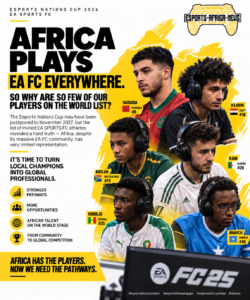
Africa already has the players. Africa already has the communities. Africa already has the passion.
The next battle is building the system that turns all three into an industry.