
H2 Grand Prix: The Race That Could Accelerate Africa’s Engineering Future
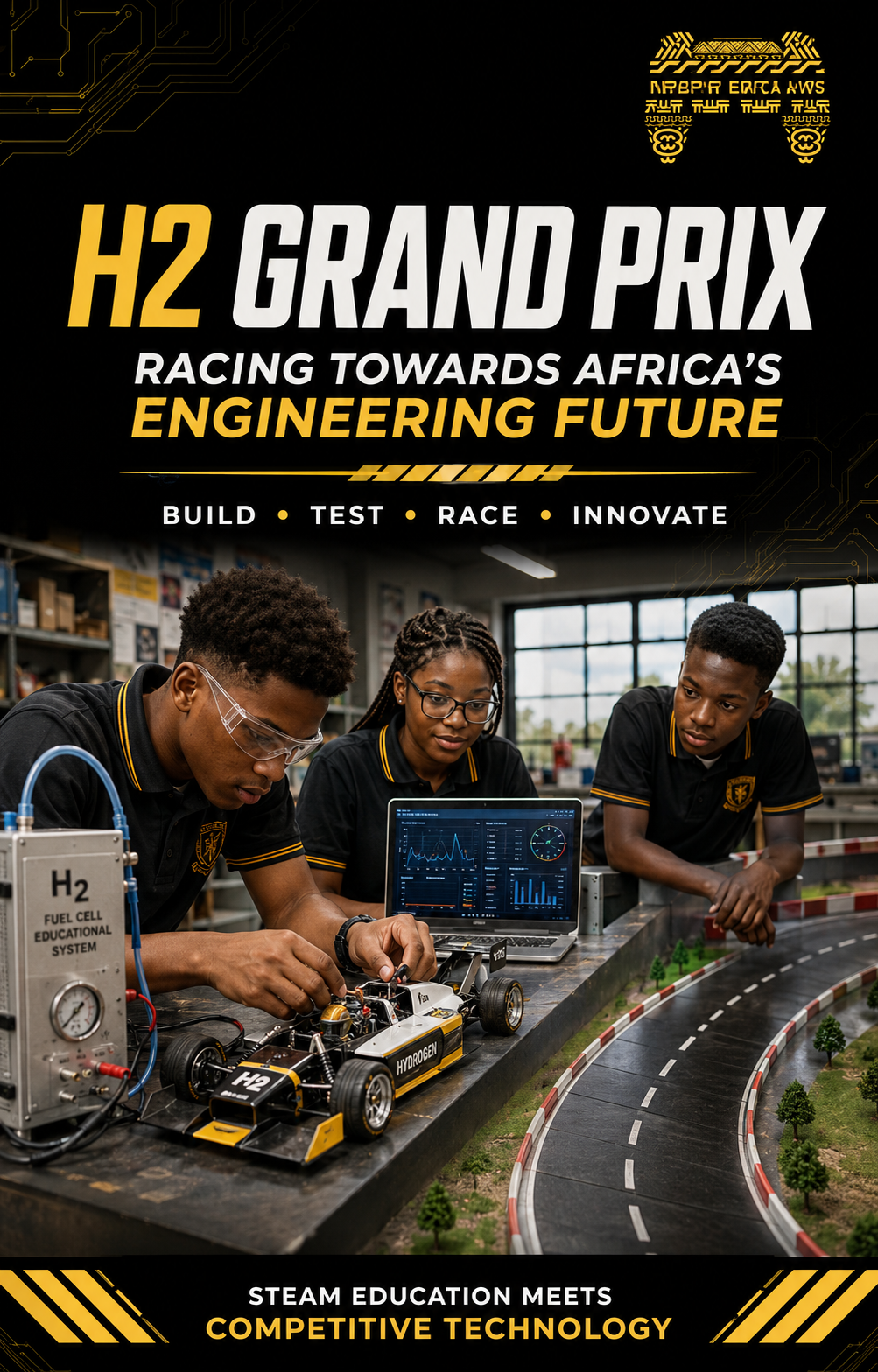
Africa’s next generation of engineers may not begin its journey inside a factory, laboratory or university lecture hall. It could start beside a miniature racetrack, with students refining a hydrogen-powered model car while teammates monitor performance, calculate energy use and decide when to make their next pit stop.
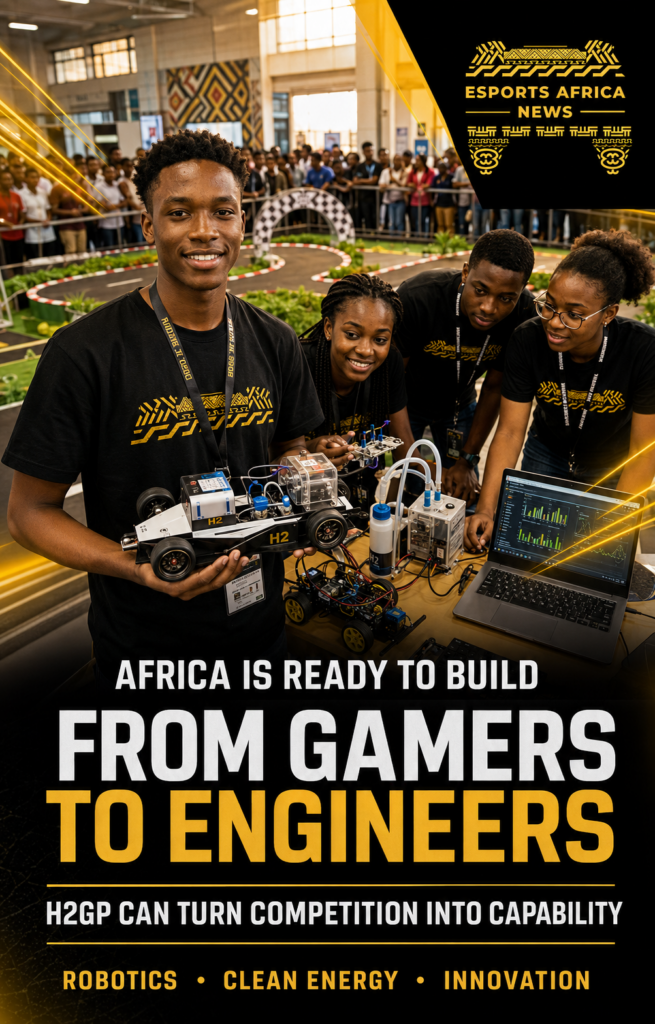
That is the educational proposition behind the Hydrogen Grand Prix, commonly known as H2GP. The programme challenges students to design, build, test and race hydrogen-powered model cars. It combines competition with practical learning across science, technology, engineering, arts and mathematics (STEAM).
The H2GP broadcast shows why the format deserves attention from African schools, universities, technology companies, energy businesses and esports organisations. It turns subjects that can appear abstract in a classroom into a visible contest involving teamwork, strategy, technical skill and measurable performance.
This is not conventional esports conducted entirely through a computer. It sits within a broader field in which physical engineering, digital systems and competition meet. Its relevance to esports lies in the familiar structure: teams, timed performance, rules, technical preparation, live presentation, commentary, data and spectatorship. Its deeper value, however, is educational.
Africa should not simply watch this model develop elsewhere. Properly adapted, it could become a practical instrument for introducing young Africans to robotics, renewable energy, engineering and technology-led competition.
Engineering made competitive
H2GP describes itself as a programme in which students design, engineer, build and race hydrogen-powered cars. Teams must understand how the vehicle works, diagnose problems and improve performance rather than merely operate a finished product.
Toyota Motor Europe’s partnership with the H2GP Foundation illustrates the programme’s educational purpose. Under the collaboration announced in 2025, schools receive hydrogen-powered model-car kits, guidance on renewable energy and support in preparing for a racing series. The initiative forms part of Toyota’s “Girls STEAM the Future” programme, which seeks to encourage wider participation in technical disciplines.
The competition therefore links several learning outcomes:
Students encounter hydrogen, fuel cells and renewable-energy concepts through practical application.
Teams test vehicle design, energy efficiency, reliability and racing performance.
Participants learn to record results, identify faults and refine their solutions.
Racing introduces strategy, communication, decision-making and time pressure.
Public competition creates opportunities for presentation, broadcasting and storytelling.
This combination matters. A science lesson can explain how energy is converted, but a race immediately shows the consequences of design choices. A poorly balanced car, an inefficient energy strategy or an unreliable component produces a visible result. Students learn that engineering is a process of testing, failure, diagnosis and improvement.
Why Africa is ready
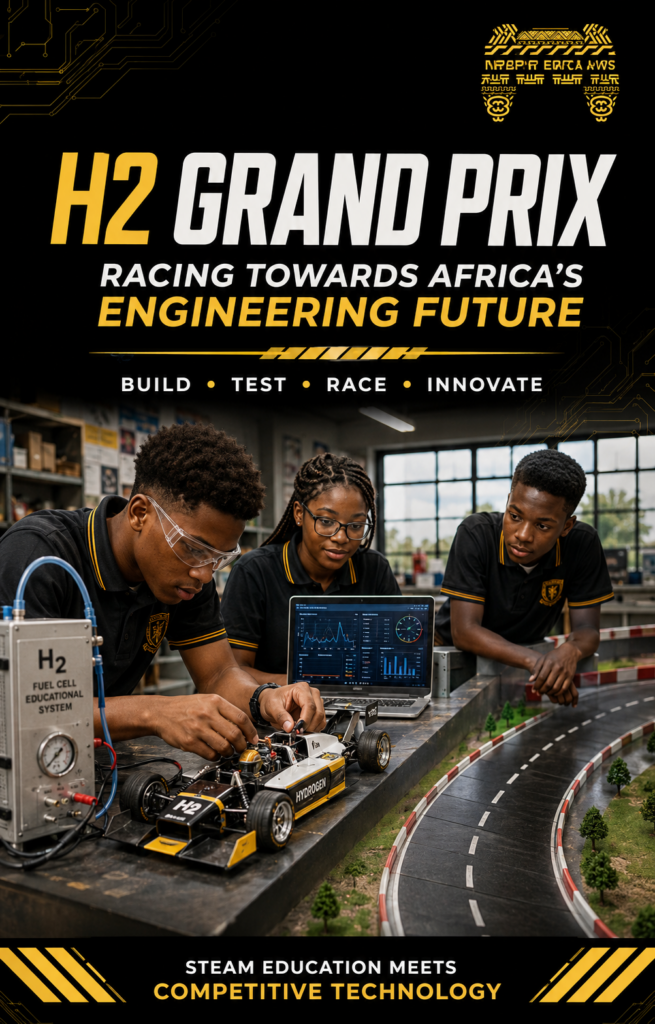
Africa cannot be treated as a single market or education system. Infrastructure, school resources, internet access and technical capacity differ considerably among and within its 54 countries. Any claim that the continent is uniformly ready would therefore be misleading.
There is nevertheless a credible case for introducing H2GP-style activations through carefully selected pilots.
Africa has a large and expanding population of young people. At the same time, governments and development institutions continue to identify shortages in advanced digital and technical skills. UNESCO has argued that stronger investment in STEM education is necessary for Africa to build the scientific and engineering capacity required for sustainable development.
That creates both a need and an opportunity. The purpose of a hydrogen racing programme would not be to claim that a model car can solve the continent’s education or employment challenges. It would provide an engaging entry point through which students can encounter engineering principles and discover possible academic and professional pathways.
African interest in competitive gaming also provides a useful cultural bridge. Young people already understand teams, rankings, practice, tournaments, commentary and championship progression. A STEAM racing activation can use that competitive language while adding a physical engineering challenge.
Instead of separating gaming from education, the model connects them. The excitement attracts attention; the engineering work creates lasting value.
From consumers to builders
Much of the international technology marketed in Africa arrives as a completed product. Consumers learn how to use the device, platform or application, but they may have little opportunity to examine how it was designed, manufactured or powered.
H2GP reverses that relationship on a manageable scale. Students are asked to become builders, analysts and problem-solvers.
A team preparing for competition could involve more than drivers. It could create roles for:
Mechanical design and vehicle assembly.
Energy management and performance analysis.
Testing, maintenance and technical compliance.
Team management and race strategy.
Graphic design, branding and visual communication.
Commentary, broadcasting and digital content production.
Event operations, officiating and sponsorship activation.
This is where the programme becomes particularly relevant to Esports Africa News. The activation would not only develop potential engineers. It could introduce participants to the larger economy surrounding competitive technology: production, media, event management, marketing, data analysis and commercial partnerships.
Not every student will become an energy engineer. Some may discover an interest in software, broadcasting, industrial design, project management or technical journalism. A well-designed activation allows those different abilities to contribute towards a shared objective.
A practical route to leapfrogging
“Leapfrogging” is often used too casually in discussions about African technology. Technology does not automatically allow a country to bypass weak infrastructure, limited financing or gaps in education. Progress requires institutions, trained people, maintenance systems and sustained investment.
H2GP could contribute to leapfrogging in a narrower and more credible sense: it could expose young Africans to an emerging technology before industrial hydrogen markets are fully developed across the continent.
The International Energy Agency reports that Africa’s present hydrogen use is concentrated in a small number of countries and that low-emissions hydrogen production remains limited. It also identifies a pipeline of proposed projects and potential applications in fertiliser, iron production, methanol and shipping. This means hydrogen should neither be presented as a mature continental industry nor dismissed as irrelevant.
Students need opportunities to understand technologies while their future uses are still being shaped. Waiting until a sector is fully established risks leaving African countries dependent on imported expertise. Early education does not guarantee industrial leadership, but it increases the number of people capable of participating in future decisions, research and enterprises.
The greatest leap would therefore be intellectual: moving students from hearing about the energy transition to experimenting with one of its technologies.
Building an African H2GP pathway
A responsible rollout should begin with pilots rather than promises of an immediate continent-wide championship. Selected schools, universities, innovation hubs and robotics clubs could test the programme under controlled conditions.
The first phase could include teacher training, equipment procurement, safety procedures, curriculum alignment and small inter-school competitions. Results should be measured against clear indicators such as participation, gender inclusion, completed vehicles, technical knowledge, student retention and progression into further STEAM activities.
A second phase could establish city and national competitions. Only after the educational and operational model had been tested should organisers consider regional or pan-African finals.
Corporate participation would be valuable, but sponsorship should extend beyond placing logos around a racetrack. Energy companies, automotive businesses, telecommunications operators, banks and engineering firms could provide equipment, mentors, scholarships, venues and pathways into work experience.
Universities could support technical verification and research. Schools could integrate the activity into science and technology teaching. Esports organisations could contribute tournament operations, production and audience engagement. Media platforms could document the students’ development instead of covering only the final race.
Affordability would be decisive. Imported kits, replacement components, teacher preparation and event facilities have real costs. A sustainable African programme would require transparent budgets, locally available maintenance support and, where technically and legally permissible, increasing participation by local makers and fabrication laboratories.
Inclusion must be designed in
The programme would lose much of its value if participation were restricted to well-funded private schools or students already enjoying access to robotics facilities.
Selection should deliberately include public schools, girls, rural communities and students with limited previous exposure to engineering. Toyota’s use of H2GP within a programme encouraging girls into STEAM offers a relevant precedent, although African organisers would need inclusion strategies suited to their own communities.
Regional qualifiers could reduce travel costs. Shared equipment hubs could serve several schools. Recorded lessons could support teachers, while physical workshops would preserve the practical character of the programme. Sponsorship could subsidise participation instead of creating entry barriers.
Access must be treated as part of the engineering challenge, not as a charitable addition after the main competition has been designed.
More than a race
Africa does not need another technology event that produces photographs, trophies and optimistic speeches before disappearing. It needs programmes that build repeatable skills, strengthen institutions and connect learning with credible future opportunities.
H2GP offers an attractive framework because the spectacle and the substance reinforce each other. The race gives students a reason to test harder. The engineering gives the competition educational meaning. Broadcasting expands its reach, while team structures create space for technical and creative talent.
Introduced carefully, measured honestly and supported consistently, hydrogen racing could become part of Africa’s STEAM and competitive-technology ecosystem.
The chequered flag would not mark the end of that process. It would mark the moment when another group of young Africans began to see themselves not merely as users of tomorrow’s technology, but as people capable of designing it.


