Germany’s President Comes to Gamescom as Africa’s Games Industry Gains Ground
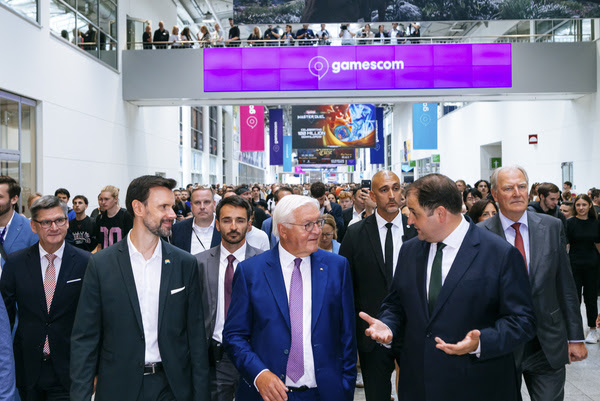
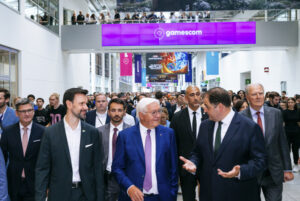
eführter Rundgang über die gamescom 2026 mit Bundespräsident Frank Walter Steinmeier (Bundespräsident der Bundesrepublik Deutschland)
Frank-Walter Steinmeier has become the first German head of state to visit gamescom. But amid the political symbolism in Cologne, another shift is becoming increasingly visible: Africa is arriving not simply as a market for games, but as a producer of them.
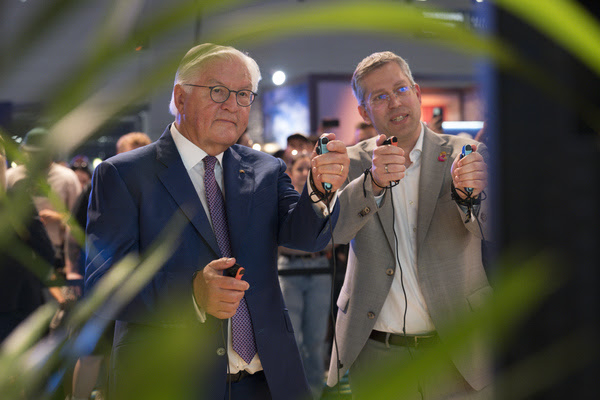
Gaming received an unusually powerful political endorsement in Germany this week when Federal President Frank-Walter Steinmeier opened gamescom congress 2026.
It was the first time a German head of state had attended gamescom, adding considerable institutional weight to an industry that has long argued that its economic and social importance extends far beyond entertainment.
President Steinmeier addressed an audience drawn from gaming, business, education, culture, politics, academia and the media before joining discussions examining the relationship between video games, communities and democracy.
The significance of the occasion was difficult to miss.
Games have become a substantial component of the global digital economy. Around them sits an increasingly complex value chain encompassing software development, artificial intelligence, animation, intellectual property, publishing, payments, advertising, esports, education and digital communities.
For Africa, that evolution presents both an opportunity and a warning.
The continent already supplies millions of players to the global gaming economy. The more important question is whether it can increasingly supply the games, studios, intellectual property and companies as well.
At gamescom 2026, there are signs that this transition is beginning.
Africa arrives with a stronger presence
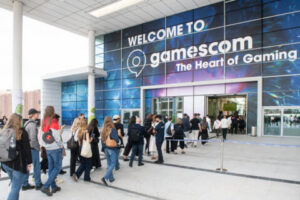
Gamescom says its 2026 edition features more than 1,600 exhibitors from 67 countries, with around 70% coming from outside Germany. There are 47 country pavilions representing 40 countries, while the exhibition covers approximately 233,000 square metres.
Among the newcomers are two African countries: Nigeria and Morocco, both appearing with new country pavilions.
Nigeria’s arrival is particularly significant.
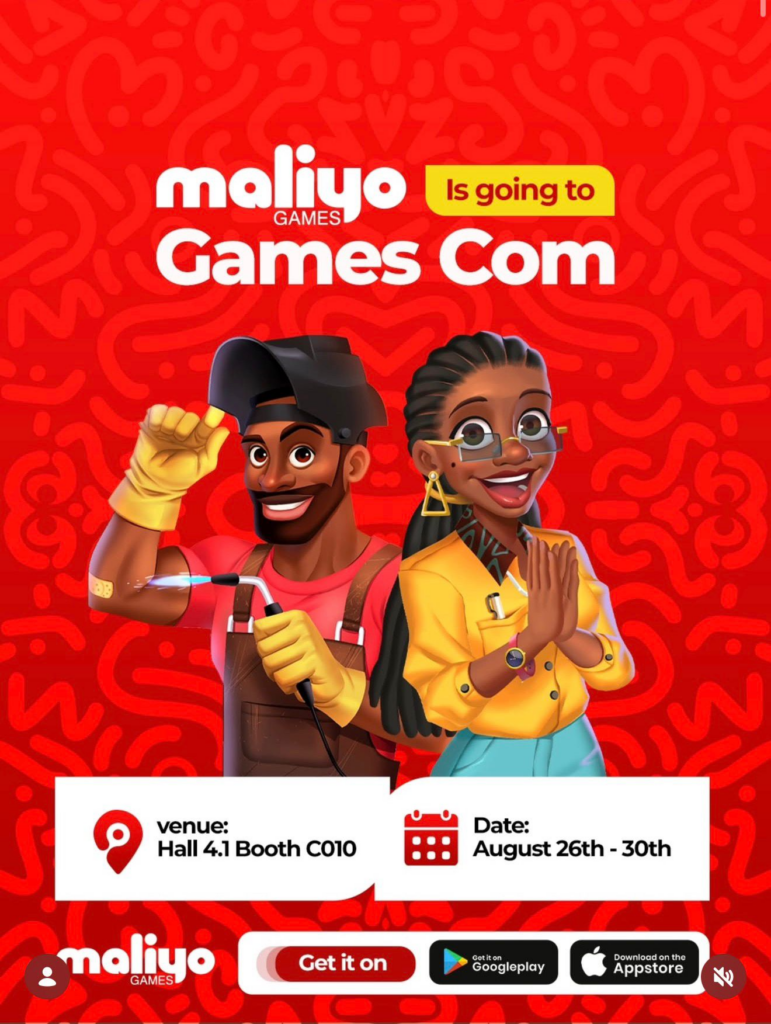
For the first time, the country has brought a dedicated national games-industry presence to gamescom through the Games from Nigeria Pavilion, situated in Hall 4.1.
Led by Hugo Obi, founder and CEO of Maliyo Games, the initiative brings Nigerian developers, studios and ecosystem organisations together under a national identity rather than leaving individual developers to navigate one of the world’s largest games-industry gatherings independently.
Participants associated with the Nigerian presence include Maliyo Games, Africacomicade, Dimensions11, CodeBox Games and Gazuntype, with Kucheza Gaming founder Bukola Akingbade behind the pavilion’s visual design.
CodeBox Games founder Prosper Moses earned his place in the delegation after winning the Lagos Games Week 2026 Pitch Stage with Hell Bleeds, providing an unusually direct example of how a domestic African games event can create a pathway onto an international industry platform.
That pathway matters.
For emerging African developers, the value of gamescom is not simply the opportunity to exhibit a game. It is access to publishers, investors, platforms, distributors, technology companies and other studios — the commercial infrastructure around which successful games businesses are built.
Ghana, Tunisia and South Africa are visible too
Nigeria is not Africa’s only presence.
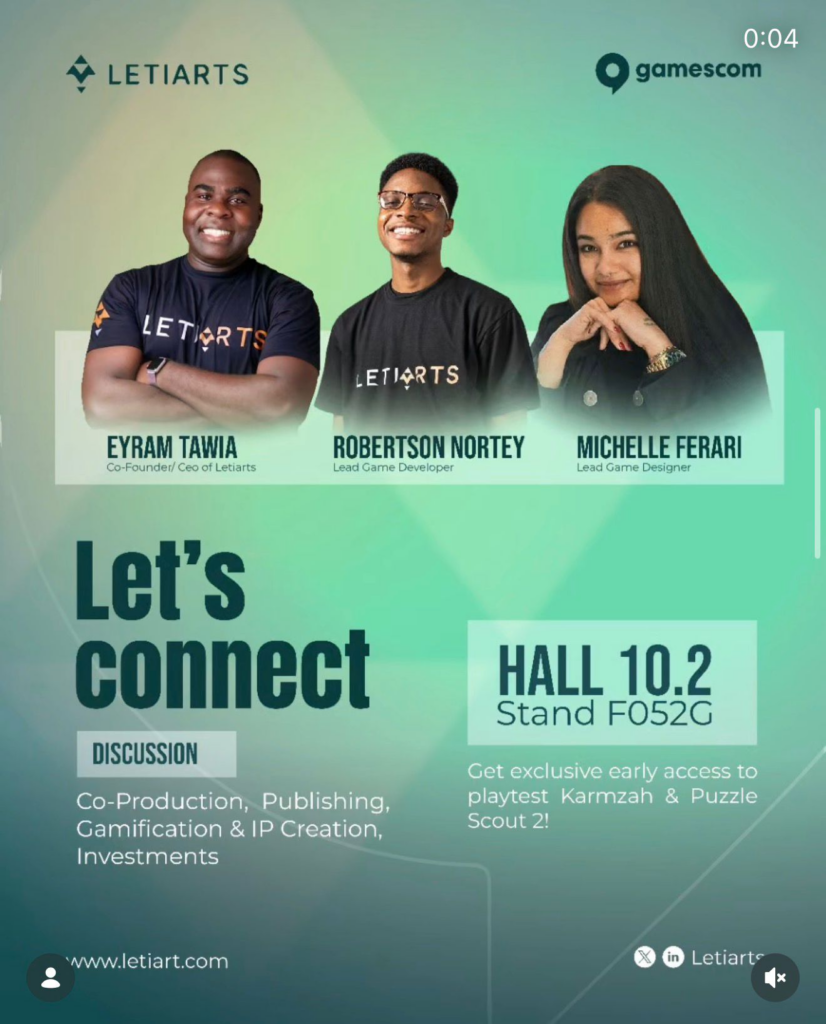
The gamescom exhibitor listings also identify Eleventeen from Ghana, Herodot Studio from Tunisia and Starvara from South Africa among exhibitors in Cologne.
Alongside the new Nigerian and Moroccan pavilions, these appearances point towards a broader African footprint at the event.
This matters because Africa’s gaming narrative has too often concentrated on consumption.
The familiar argument is compelling: Africa has a young population, expanding smartphone ownership, improving connectivity and a rapidly developing digital economy. Those characteristics make the continent an attractive future market for international publishers.
But being an attractive market and building a valuable industry are not the same thing.
The greater prize is production.
African studios need to create intellectual property that can travel internationally. African developers need access to global publishing and distribution. Local businesses need to participate in animation, software engineering, localisation, esports, payments and game services.
The difference is economic.
A continent that primarily consumes games sends much of the value elsewhere. A continent that develops, publishes and owns successful games retains intellectual property, creates skilled employment and develops businesses capable of exporting digital products globally.
Gamescom therefore represents something larger than exhibition space for Africa.
It represents market access.
Nigeria attempts to build a bridge
The Games from Nigeria Pavilion provides an interesting model.
Rather than treating international exposure as a series of isolated studio visits, the pavilion creates a recognisable national proposition around Nigerian game development.
Its programme includes showcases, presentations and networking opportunities, alongside an Africa Games Industry Mixer bringing together developers, studio founders, publishers, investors, platforms, media and ecosystem organisations.
The objective is commercial as much as promotional: connect African developers with the international companies capable of publishing, financing, distributing or supporting their products.
That distinction is important.
African gaming has accumulated conferences, tournaments, communities and talented developers. What remains comparatively scarce is the infrastructure that turns creative talent into globally competitive companies.
Capital is one part of that problem. Distribution is another. Experienced producers, publishers, specialist talent and access to international commercial networks matter too.
Gamescom puts many of those ingredients in the same city for a few days.
Germany places gaming within society
The growing African presence came against the backdrop of President Steinmeier’s intervention in the wider debate about gaming.
In his opening address, the Federal President highlighted several ways games can contribute to society, including providing an outlet from everyday pressures, helping counter loneliness and developing cognitive abilities.
He also pointed towards their potential contribution to historical knowledge and civic education, as well as the way games can encourage consideration of values, rules and fair play.
The President subsequently attended two opening discussions examining games and democracy.
“Games for democracy: what they can and cannot do” brought together North Rhine-Westphalia’s Minister for Media Nathanael Liminski, Nandita Wegehaupt of the Foundation for Digital Games Culture and Olaf Zimmermann of the German Cultural Council.
A second discussion, “Saving the world through play: what games and their communities can achieve,” featured Paintbucket Games founder Jörg Friedrich, Professor of Experience and Game Design Sabiha Ghellal and PietSmiet founder Peter Smits.
The discussions reflected one of the congress’s central themes: “Playing Field: Democracy.”
Felix Falk, Managing Director of game – The German Games Industry Association, described the presidential visit as a signal of the social value attached to games and the communities and companies surrounding them.
Koelnmesse President and Chief Executive Gerald Böse similarly emphasised gamescom’s role as a meeting point for industry, politics, academia, media and communities.
There is a lesson here for African governments
Perhaps the most important Gamescom story for Africa is therefore not any individual game being exhibited in Cologne.
It is institutional recognition.
Germany’s head of state opening a games congress sends a message about how mature economies are beginning to position interactive entertainment within wider conversations about technology, culture, society and economic development.
African governments should pay attention.
Gaming policy cannot simply mean organising an esports tournament or inviting young people to play games.
A serious games-industry strategy encompasses intellectual-property protection, investment incentives, skills development, access to finance, broadband infrastructure, publishing, animation, software engineering, education and international market access.
It also requires governments to recognise game studios as businesses capable of creating exportable intellectual property.
Nigeria’s first Gamescom pavilion offers one example of what that shift can look like.
Instead of African developers travelling individually and disappearing among more than 1,600 exhibitors, a national pavilion provides collective visibility and a clearer proposition to investors and international partners.
Other African countries with emerging development ecosystems should be considering similar strategies.
From representation to transactions
Yet Africa should be careful not to confuse attendance with progress.
The success of the continent’s growing Gamescom presence should eventually be measured by what happens after Cologne.
How many publishing agreements are signed?
How much investment reaches African studios?
How many games secure international distribution?
How many developers gain contracts or employment?
How many African-owned intellectual properties reach international audiences?
And, perhaps most importantly, how many studios return to gamescom in future years because their businesses have grown?
These are harder measures than photographs, delegations and pavilion launches. They are also considerably more important.
Africa does not need simply to become more visible within the global games industry. It needs to capture a greater share of its economic value.
Africa is no longer just watching
There is nevertheless something important about what is happening in Cologne.
Nigeria has arrived with its first dedicated pavilion. Morocco has joined the country-pavilion roster. Developers and studios from Ghana, Tunisia and South Africa are among the African businesses visible at the event.
African industry organisations and representatives are also using gamescom to connect developers with publishers, investors and potential partners.
The direction of travel is becoming clearer.
For years, the international conversation about African gaming has centred overwhelmingly on potential: population growth, mobile penetration, young consumers and the possibility of hundreds of millions of future players.
The more interesting conversation is now beginning.
What if Africa does not merely become one of the world’s largest gaming markets?
What if it also becomes one of the places where the world’s games are made?
Gamescom 2026 offers a glimpse of that possibility.
For Africa, the objective must therefore extend beyond securing more seats at gaming’s global table.
It must be about building the studios, talent, capital, intellectual property and distribution networks that allow African companies to own a meaningful part of the industry itself.
The transition that matters is simple to describe, but considerably harder to achieve:
from players to producers; from consumers to owners; and from market potential to an industry capable of exporting African creativity to the world.
Esports Africa News — Connecting Africa’s Games & Esports Ecosystem